Local markets have recently been closely monitoring construction cost fluctuations. In this context, official data shows a notable stability in cement and concrete prices in Saudi Arabia during February. This stability reflects the strength and resilience of the local economy and its ability to absorb global changes. According to periodic reports issued by the General Authority for Statistics, the building materials market did not register any sharp changes compared to the previous month of January, sending reassuring messages to both investors and contractors.
Historical development of the construction sector and the movement of cement and concrete prices in Saudi Arabia
Historically, the construction sector in Saudi Arabia has been linked to oil booms and the five-year development plans that shaped the country's infrastructure. With the launch of Vision 2030, the sector entered an unprecedented phase of growth thanks to mega-projects such as NEOM, the Red Sea Project, and Qiddiya. These massive projects required enormous quantities of building materials, making monitoring cement and concrete prices in Saudi Arabia crucial. Over the years, the Saudi government has been keen to support domestic factories and streamline procedures to ensure ample supply, which has directly contributed to avoiding the sharp inflation in construction costs that plagues many regional and global markets.
Price index details for February
Delving into the details of the monthly bulletin on average commodity prices, we find that price movements were within a narrow and limited range. The price of a 50 kg bag of locally produced black cement remained stable at SAR 15.8 during February, showing no significant change from the previous month. In contrast, locally produced white cement (50 kg) recorded a slight increase of 1%, reaching SAR 38.2, while locally produced gypsum (40 kg) remained unchanged at SAR 15.7.
The reality of ready-mix concrete and basic building materials
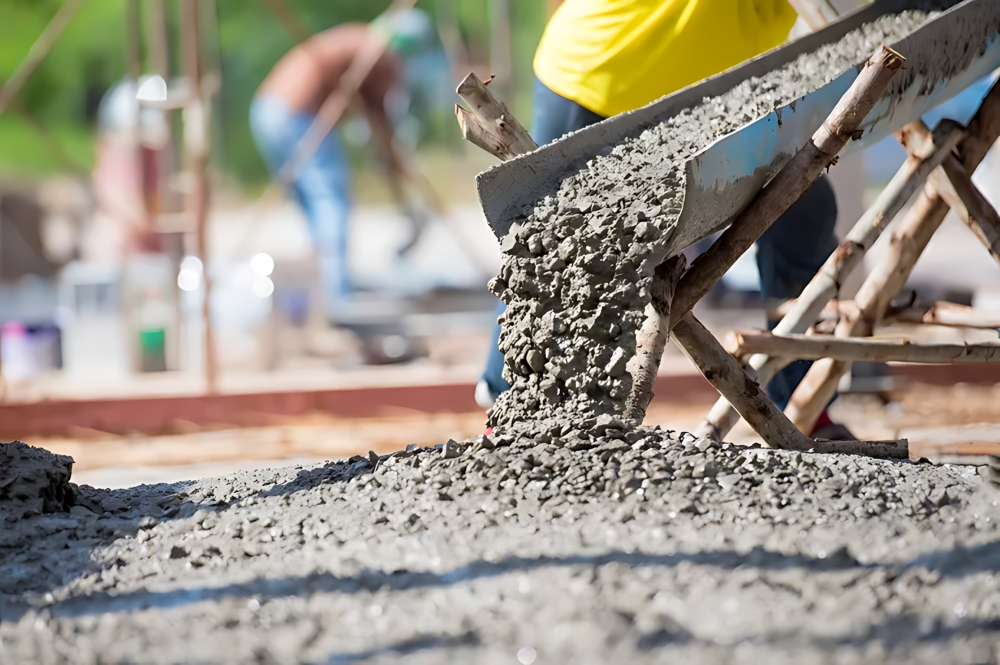
As for ready-mix concrete, the overall market remained stable. The price per cubic meter of ordinary concrete (350K grade) was approximately 217.8 riyals, while high-strength concrete (350K grade) was priced at 228.2 riyals per cubic meter. For lower grades, ordinary concrete (250K grade) remained at 199 riyals, and high-strength concrete (250K grade) at 208 riyals.
Regarding other building materials, locally crushed marble tiles maintained their price at SAR 23.3 per square meter. Sand prices saw very slight fluctuations; the price of fine white sand decreased by 0.5% to SAR 77.1 per square meter, and red sand decreased by 0.7% to SAR 38.5. Meanwhile, the price of mixed sand and gravel (per cubic meter) increased by 0.4% to SAR 52.2. In the concrete block sector, the prices of 15 cm and 20 cm blocks (per thousand) remained stable at SAR 1683.3 and SAR 1730.2, respectively.
Economic dimensions and expected impact of market stability
This stability in construction costs is of paramount importance and has far-reaching positive effects on multiple levels. Locally, price stability empowers construction companies and real estate developers to plan their finances accurately and price residential and commercial units without fear of sudden fluctuations that erode profit margins, thus supporting efforts to provide affordable housing for citizens and meet growing demand.
Regionally and internationally, this situation reinforces the attractiveness of the Saudi market as a safe and stable investment environment. Foreign companies seeking partnerships to implement major infrastructure projects consider the stability of commodity prices a crucial factor in their risk assessment. The Kingdom's ability to maintain a balance between supply and demand in such a vital sector, despite global economic challenges and supply chain disruptions, underscores the success of its economic policies and ensures the continued flow of foreign direct investment to support comprehensive development.