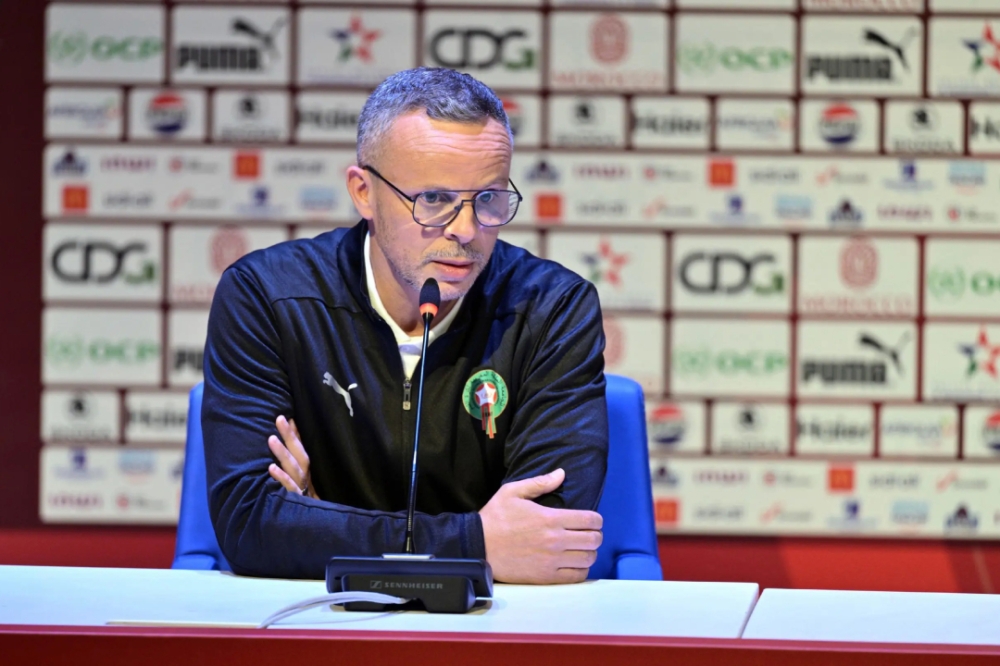
Mohamed Wahbi, the new coach of the Moroccan national football team, expressed his immense satisfaction with CAF's decision to strip Senegal of the Africa Cup of Nations title and award it to the "Atlas Lions." Wahbi described the decision as "well-deserved," while emphasizing that his primary focus is now on future challenges and improving the team's performance.
These statements came during a press conference held by the coach in the city of Salé, dedicated to revealing the list of players called up for two friendly matches at the end of March. Wahbi said, “I would like to congratulate all Moroccans, the technical staff, the players, and the federation on this joyous and well-deserved news that has delighted everyone.” He added, emphasizing his vision for the future, “What’s important for me is to focus on the present and the future, and my ultimate goal is to ensure the team performs well in the upcoming World Cup.”.
The historical context of the competition and the developments in the CAF decision
The significance of CAF's decision stems from the historically fierce rivalry between Moroccan and Senegalese football for continental supremacy. Morocco, having achieved an unprecedented feat by reaching the 2022 World Cup semi-finals, constantly strives to reaffirm its continental dominance. Meanwhile, Senegal is a formidable footballing powerhouse boasting a wealth of professional stars. This intense rivalry has transformed matches between the two nations into early finals, lending considerable weight to any administrative or disciplinary decisions issued by the Confederation of African Football (CAF) concerning either team.
Wahbi took over as coach of the Atlas Lions just two weeks ago, succeeding Walid Regragui, after the Moroccan national team failed to win the 2025 Africa Cup of Nations title on home soil last January, losing the final match to Senegal 0-1. However, the CAF Appeals Committee surprised the sporting world by announcing on Tuesday evening that Senegal had been considered to have withdrawn from the final, and that the result was "a 3-0 victory" for Morocco.
Dimensions and implications of withdrawing the Africa Cup of Nations title
This dramatic turn of events has far-reaching implications. Domestically, this crowning boosts the morale of Moroccan fans and underscores the strength of the Moroccan Football Federation's legal position. Regionally and internationally, this action sends a firm message about the importance of upholding sportsmanship, with the Moroccan Federation praising the decision and affirming that it "contributes to respecting the rules." However, the final verdict remains pending, awaiting the decision of the Court of Arbitration for Sport, to which the Senegalese Federation has announced its appeal against what it calls an "unjust" ruling.
The final crisis and the Atlas Lions' aspirations towards the World Cup
The crisis stemmed from the final minutes of the final match held in Rabat. Tensions flared when the Congolese referee, Jean-Jacques Ndala, awarded a penalty to the home team at the end of regulation time, after disallowing a goal by Sadio Mane's teammates. Following this, the Senegalese players threatened to walk off the pitch and left the field, before returning to complete the match, which saw Ibrahim Diaz miss the penalty.
At the end of January, the CAF Disciplinary Committee imposed, in an initial decision, a series of financial disciplinary sanctions on the two countries’ federations amounting to hundreds of thousands of euros due to “unsportsmanlike conduct,” without affecting the final result at the time, but Morocco successfully appealed the decision.
Now, the Moroccan national team, ranked eighth globally and first in Africa in the FIFA rankings, will compete in Group C of the 2026 World Cup alongside Brazil, Scotland and Haiti, looking forward to achieving new accomplishments to add to its record.