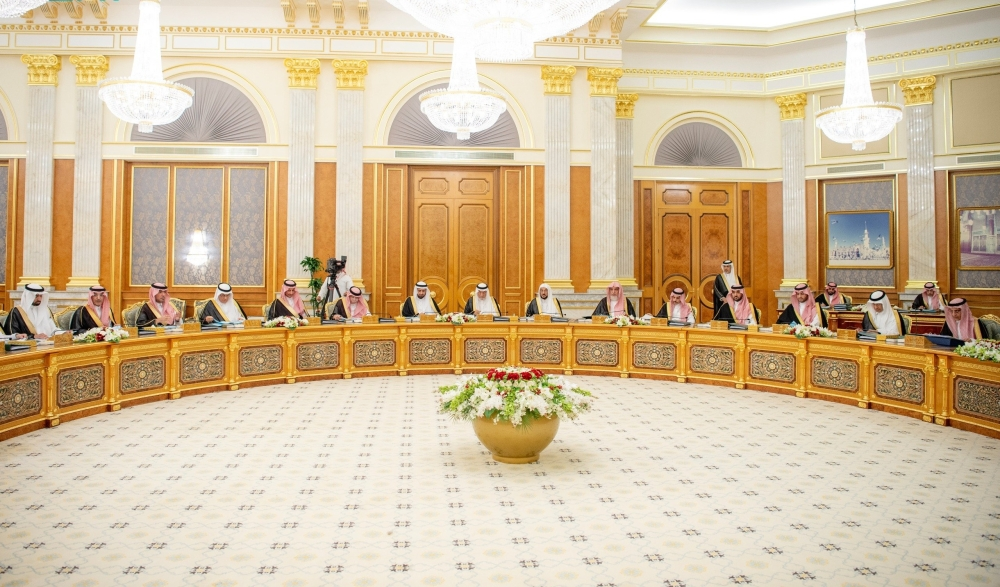
The Custodian of the Two Holy Mosques, King Salman bin Abdulaziz Al Saud, may God protect him, chaired the Cabinet meeting held today in the capital, Riyadh. The Cabinet began its work by reviewing the content of the high-level diplomatic communications conducted and received by His Royal Highness Prince Mohammed bin Salman bin Abdulaziz, Crown Prince and Prime Minister, may God protect him.
These contacts, which included the leaders of Turkey, Syria, Qatar and Pakistan, come within the framework of the pivotal role played by the Kingdom of Saudi Arabia in promoting Islamic and Arab solidarity, and coordinating positions towards the rapidly evolving challenges in the regional and international arenas, reflecting the Kingdom’s political weight and its constant concern for the stability of the region.
On the regional front, the Council paid close attention to the latest developments in the Republic of Yemen, affirming the Kingdom's continued commitment to supporting peace and stability. The Council reiterated its welcome of Dr. Rashad al-Alimi's call for a comprehensive conference in Riyadh for southern factions, a step that reflects the Kingdom's longstanding commitment to fostering Yemeni-Yemeni dialogue and its tireless efforts to unify ranks in order to achieve the aspirations of the brotherly Yemeni people for security and prosperity.
The Council also addressed, as explained by His Excellency the Minister of Media, Mr. Salman bin Yousef Al-Dossari, the deteriorating humanitarian situation in the Gaza Strip. The Council affirmed that the air, sea, and land bridges established by the Kingdom to aid the Palestinian people are not merely temporary assistance, but rather a practical manifestation of the Kingdom's unwavering and steadfast position on the Palestinian cause, and a confirmation that Palestine is at the heart of the concerns of the Saudi leadership and the Saudi people.
On the domestic and developmental front, the Cabinet commended the Kingdom's significant strides in the technology sector, praising the launch of the Hexagon data center project in Riyadh. This project, the largest of its kind globally for a government data center, represents a strategic step aligned with the goals of Vision 2030, which aims to build a robust digital economy, ensure national data sovereignty, and enhance the Kingdom's position as a global technology hub connecting continents.
In the context of organizational decisions, the Council issued a significant resolution approving the establishment of the National Commission for Education, Culture and Science. This step is important due to the vital role the Commission plays as a key link between the Kingdom and major international organizations such as UNESCO, ALECSO, and ISESCO, which will contribute to strengthening Saudi Arabia's global cultural presence and developing the education and science sectors according to the highest international standards.
The council concluded its session by issuing a number of decisions and approvals, which are as follows:
- Approval of the draft headquarters agreement between the Kingdom’s government and the Regional Center for Quality and Excellence in Education.
- Approval of a memorandum of understanding with the Netherlands in the field of adopting and localizing innovations in the environment, water and agriculture sector.
- The Minister of Tourism is authorized to negotiate and sign tourism memoranda of understanding with both Trinidad and Tobago, and the People’s Republic of China.
- Strengthening cooperation in earth sciences by authorizing the Minister of Industry to hold discussions with the Kazakh side.
- Approval of a memorandum of understanding with the Sultanate of Oman in the field of competition protection and prevention of monopoly.
- Strengthening security cooperation by approving an agreement with Zambia to combat terrorism and its financing.
- Approval of a memorandum of understanding with Morocco in the field of vegetation development and combating desertification.
- Approval of the rules and procedures for the National Minerals Program.
- The National Program for the Development of the Information Technology Sector has been renewed until the end of 2030.
- Appointment of new members to the Board of Directors of the Local Content and Government Procurement Authority.