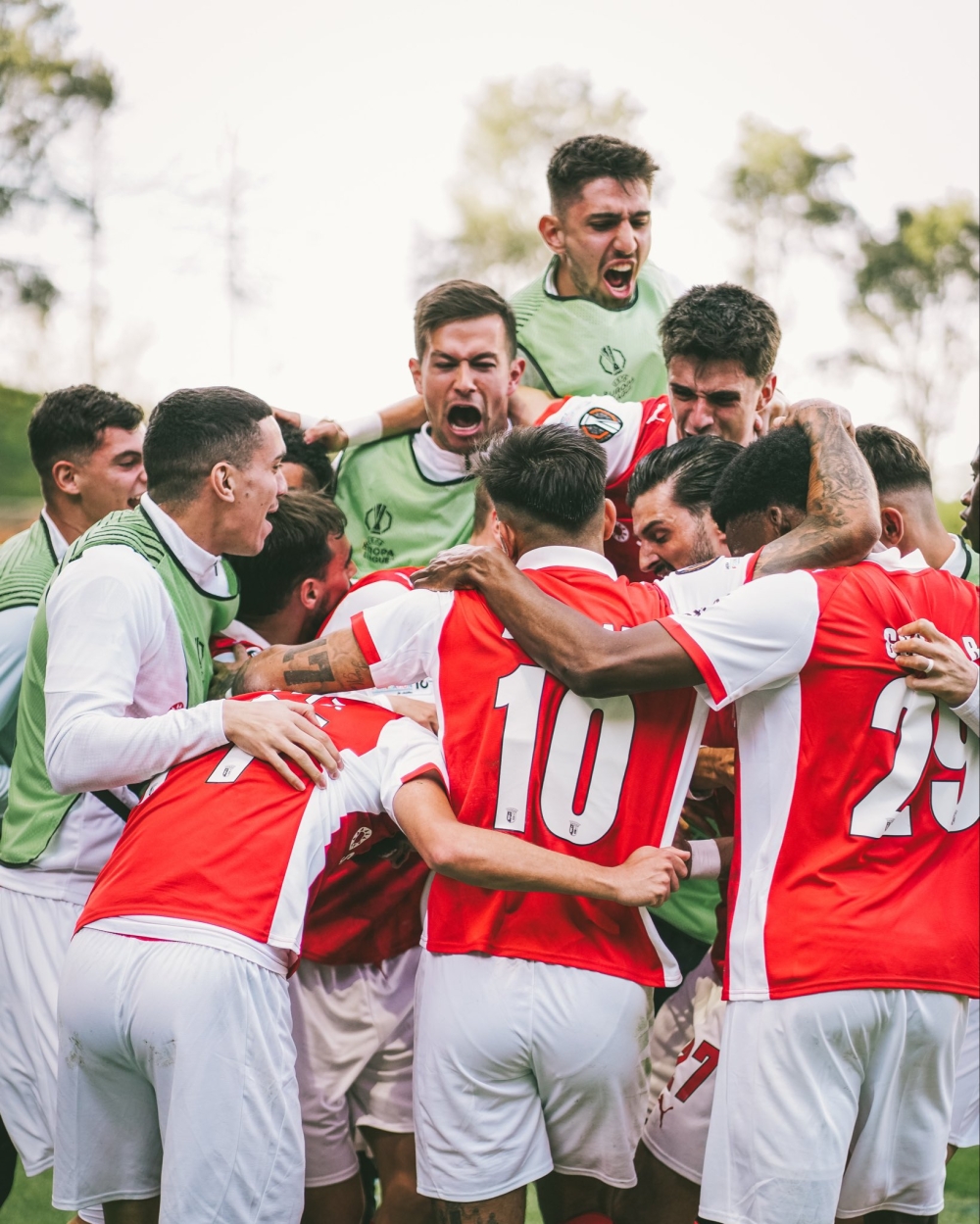
The continental football scene witnessed a magical and thrilling night, as Braga's historic comeback secured in the Europa League quarterfinals. The Portuguese side achieved a resounding 4-0 victory over Hungarian visitors Ferencváros in Wednesday's match. This impressive win overturned their surprising 2-0 first-leg deficit in Hungary, proving Braga's resilience and ability to turn things around even in the most challenging circumstances.
Details of the decisive confrontation and Portuguese dominance
The Portuguese team imposed their complete control on the match from the opening minutes, with the players entering the pitch with a clear determination to overcome the two-goal deficit. Star player Ricardo Horta shone brightly, opening the scoring in the 11th minute before adding his second goal in the 53rd minute. Horta wasn't the only one to shine; Austrian Florian Grillitsch contributed to the goal fest by scoring the second goal in the 15th minute, followed by Spaniard Gabri Martinez with the third in the 34th minute. These three goals in the first 45 minutes were enough to settle the matter early and extinguish any hopes the visiting team had of a comeback.
In contrast, Hungarian side Ferencváros, coached by former Irish international Robbie Keane (former Tottenham Hotspur and LA Galaxy legend), delivered a lackluster performance and were completely absent from the first half. Despite Keane's attempts to salvage the situation and improve his team's performance somewhat in the second half in search of a goal to get them back into contention, Braga's strong defensive organization prevented them from doing so, and the match ended with the Hungarian team's elimination from the tournament.
The historical context of Braga's participation in the Europa League
This qualification is no accident; it's the continuation of Braga's rich history in the Europa League . Sporting Braga is one of the Portuguese clubs with a long and distinguished history in this competition. Football fans fondly remember the team's historic run to the 2011 final, where they faced fellow Portuguese side Porto in an all-Portuguese affair. Since then, Braga has become a force to be reckoned with in European competitions and a proud representative of Portuguese football, consistently striving to challenge the dominance of the established clubs and prove their ability to compete at the highest levels. This historical legacy provides the players with extra motivation each season to replicate past achievements and go as far as possible.
The strategic dimensions of qualification and its expected impact
This qualification carries immense significance that transcends simply winning a football match. Domestically, this victory boosts the standing of Portuguese clubs in UEFA's coefficient rankings, securing additional places for Portugal in future continental competitions. Regionally and internationally, this comeback sends a strong warning to the other contenders in the tournament: Braga possesses the character of a champion, capable of turning the tables at any moment.
With this victory, Braga became the first team to officially qualify for the quarterfinals, and now eagerly awaits the identity of their next opponent, which will be determined by the upcoming match between Panathinaikos of Greece and Real Betis of Spain. It's worth noting that the Greek team holds a slight advantage after winning the first leg at home 1-0, pending the outcome of the decisive second leg in Spain on Thursday. Regardless of their opponent, Braga has proven they are ready to continue their continental journey with confidence and determination.