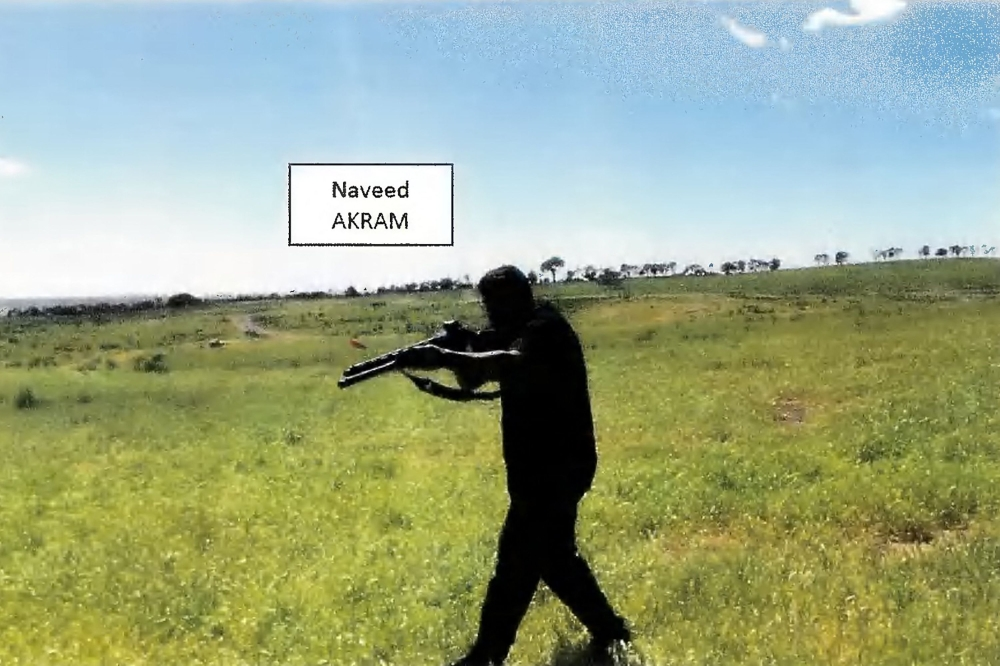
Australian police investigations have revealed new and disturbing details about the deadly attack on a Jewish celebration at Bondi Beach in Sydney, which left 15 people dead and dozens injured. Authorities stated that the accused, Naveed Akram and his father Sajid, underwent extensive firearms training in remote rural areas of New South Wales before carrying out the attack.
Meticulous planning and connection to the state organization
Police documents released on Monday revealed that the father and son did not carry out the attack randomly, but rather after months of meticulous planning. The evidence included photographs of the suspects practicing shooting rifles and moving in what police described as a "tactical" manner, indicating a premeditated intent to inflict maximum casualties.
In the context of ideological motives, investigators found a video on one of the perpetrators' phones showing them sitting in front of an ISIS flag, reciting verses from the Quran and issuing threats against "Zionists." The investigation also revealed that they had conducted a reconnaissance trip to Bondi Beach days before the attack to study the site, and that they had used hand grenades which fortunately failed to detonate.
Historical background: The specter of the Port Arthur massacre
This attack brings back painful memories for Australian society, being the worst in nearly three decades. Specifically, it recalls the 1996 Port Arthur massacre, in which 35 people were killed, a turning point that prompted Australia to enact stricter gun control laws. The Bondi attack presents a new challenge to this security system, prompting the government to take immediate action to close the loopholes exploited by the perpetrators.
Official apology and unprecedented government measures
In an official response, Prime Minister Anthony Albanese offered a sincere apology to the country's Jewish community, expressing his deep regret for what they had endured. Albanese stated firmly, "We will not allow terrorists inspired by the ideology of ISIS to divide our society.".
The government did not stop at verbal condemnation, but announced a package of legislative reforms, the most extensive since the 1990s, including:
- National gun buyback plan: aims to reduce the number of firearms circulating on the streets.
- New South Wales tightens gun ownership laws: Ownership will be capped at 4 firearms for individuals and 10 for farmers, in a state with more than 1.1 million firearms.
- Banning hate symbols: Criminalizing the raising or display of symbols of terrorist organizations such as the ISIS flag.
- Broad security powers: Granting authorities the right to ban protests for up to three months following terrorist attacks to ensure public safety.
Social impact and future concerns
The attack cast a long shadow over the social fabric of Australia, raising fears of a rise in hate speech and antisemitism. Life is gradually returning to Bondi Beach, where residents laid flowers in remembrance of the victims, but the incident has left a deep wound that will take a long time to heal, amid government pledges of a comprehensive review of police and intelligence procedures to ensure such atrocities never happen again.