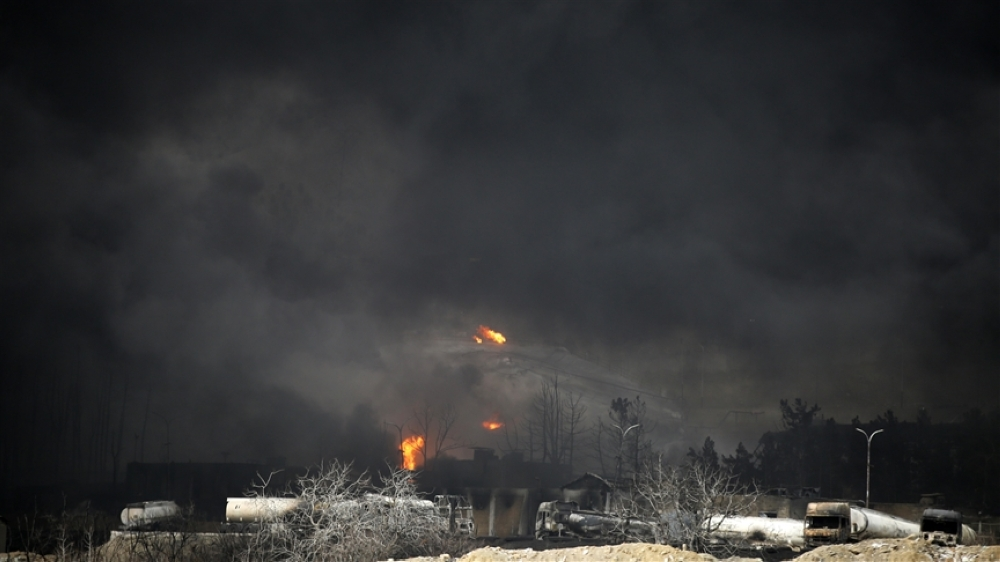
Washington Dulles International Airport experienced a worrying incident on Saturday when a Boeing 777-200ER was forced to return and make an emergency landing shortly after takeoff en route to Tokyo, Japan. The crew made the drastic decision due to a sudden engine malfunction, which caused a fire that spread to the grass surrounding the runway.
Details of Flight 803 and the safe return
The airline confirmed that Flight 803, carrying 275 passengers and a crew of 15, experienced a power outage in one of its engines during initial takeoff. Thanks to the crew's professional handling of the situation, the aircraft was able to return and land safely at Washington Dulles International Airport at approximately 1:30 p.m. local time, with no injuries reported among passengers or crew. A replacement aircraft was provided to transport the passengers to their original destination at Tokyo Haneda Airport.
Safety procedures and fuel unloading maneuver
According to the aviation news website AirLife, eyewitnesses and air traffic control data showed the aircraft performing a maneuver to dump fuel before landing. This procedure is a crucial safety protocol in aviation, as aircraft take off with a weight significantly exceeding their maximum takeoff weight. To avoid the immense stress on the aircraft's structure and landing gear, or the risk of fuel ignition upon hard impact with the ground, pilots dump fuel into the air to reduce weight and ensure a safe landing.
Controlling the fire and its impact on the airport
A spokesperson for Washington Dulles International Airport, the largest airport in the Washington, D.C., area, reported that an engine malfunction caused sparks and hot debris to ignite some trees and brush near the runway. Airport fire crews responded quickly, extinguishing the fire and inspecting the aircraft immediately after it landed. Although the affected runway was temporarily closed to ensure operational safety, airport management confirmed that overall air traffic was not significantly affected due to the availability of multiple runways capable of handling heavy air traffic.
Official investigations and aircraft record
US regulatory bodies became involved immediately after the incident. The Federal Aviation Administration (FAA) announced a comprehensive investigation into the cause of the engine failure. Simultaneously, the National Transportation Safety Board (NTSB) began collecting preliminary data to assess whether the incident warranted a full-scale formal investigation. It's worth noting that the aircraft in question, equipped with two General Electric (GE Aerospace) engines, had been in service since November 1998, placing it among the long-service aircraft, which may lead investigators to examine its maintenance records.
Global aviation sector context
This incident comes at a time when the global aviation industry is facing increasing scrutiny regarding safety and maintenance standards, particularly concerning Boeing aircraft. While the 777 is considered one of the safest and most reliable aircraft in modern aviation history, any incident involving engines or structural integrity is treated with the utmost seriousness to ensure continued passenger confidence and prevent any recurrence of such technical failures in the future.