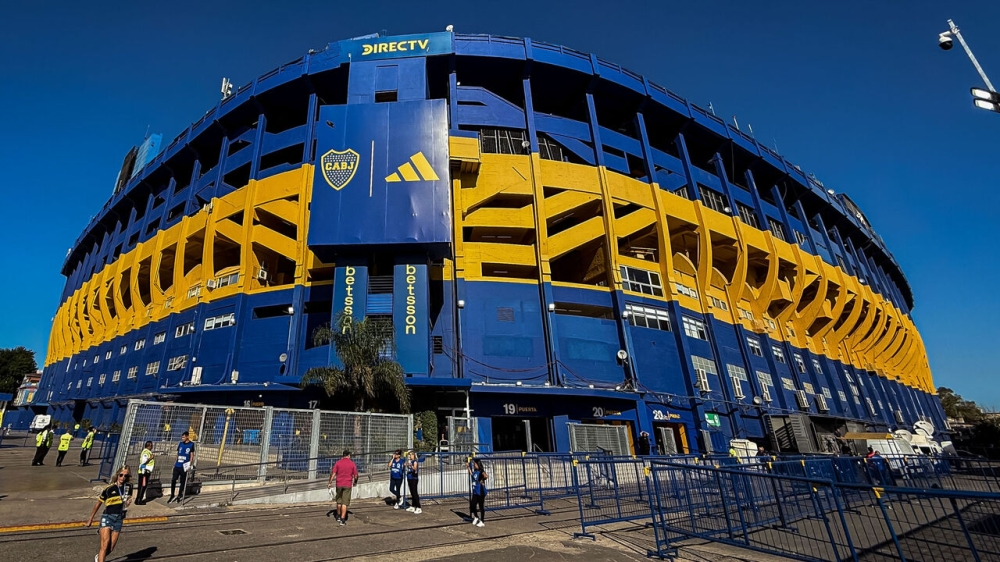
Argentine football legend and current Boca Juniors president Juan Roman Riquelme has announced a long-awaited and historic project to expand the iconic La Bombonera stadium . This ambitious undertaking aims to increase the stadium's capacity from its current 57,000 to 80,000, marking a significant leap forward for the prestigious club and enhancing its competitiveness and investment potential.
A rich history: The cultural and sporting significance of Boca Juniors' stronghold
La Bombonera, officially named the Alberto José Armando Stadium, is one of the most famous and intimidating stadiums in the world of football since its opening in 1940. Located in the La Boca neighborhood of Buenos Aires, Argentina, the stadium is distinguished by its unique D-shaped design, which creates a massive acoustic box that amplifies the chants of the fans, creating a terrifying atmosphere for opposing teams. This iconic stadium has long been associated with football legends such as Diego Armando Maradona and has witnessed the team's numerous domestic and continental titles. Preserving this architectural and sporting legacy has always been a priority for successive administrations, which explains the insistence on developing it in its original location rather than relocating it.
Details of the La Bombonera stadium expansion project and the engineering challenges
Former Boca Juniors playmaker Riquelme explained in comments to the club's official website that the La Bombonera stadium expansion plan is now closer to becoming a reality after receiving initial approval from Ferrosur, the company responsible for the railway line that runs just meters from the stadium. Riquelme said enthusiastically, "This is the first time I've felt that we're close to realizing the dream of Boca Juniors fans: expanding our historic home.".
The comprehensive renovation plan includes the construction of a fourth, upper tier, as well as the creation of two new seating areas to replace the existing boxes, which will be demolished. The project also includes the installation of a partial roof to cover some of the stands and provide protection for spectators. To ensure smooth fan movement, four towers equipped with modern elevators will be built to transport fans to the future fourth ring. This complex engineering undertaking requires final building permits from the adjacent freight railway company, as well as approval from the National Transport Regulatory Commission.
Confronting the opposition and preserving authentic identity
In his remarks, Riquelme strongly criticized the opposition's plans within the club, reaffirming his commitment to remaining at the historic site. He stated, "We will not budge an inch, contrary to what the opposition has proposed, which is to build a new stadium 100 meters from here. La Bombonera cannot be moved, and we must not lie to the fans.".
It is worth noting that before Riquelme's election as club president in late 2023, the idea of negotiating with residents of the surrounding area to purchase the houses behind the VIP boxes in order to build a new stand was raised. However, studies have shown that between 15 and 20 houses are classified as part of Buenos Aires' architectural heritage, making any intervention or expansion on the south side of the stadium legally and culturally impossible.
Expected impact of increased audience capacity and regional competition
The importance of this project extends far beyond its constructional aspects, encompassing wide-ranging economic and sporting impacts. Locally, increasing capacity to 80,000 spectators will double the club's revenue from match and event tickets, meeting the immense demand from club members who currently find it extremely difficult to attend matches. Regionally and internationally, the renovated stadium will solidify Boca Juniors' position as a major economic and sporting force in South America, making it an even more attractive venue for hosting the finals of major continental tournaments.
This strategic move also comes amidst an infrastructure development race with arch-rival River Plate. At the end of January, River Plate announced a massive plan to redevelop its historic Monumental Stadium, increasing its capacity from 85,000 to 101,000 seats and adding a full roof by 2029. This fierce competition between the two giants of Argentine football is having a positive impact on the entire sporting landscape in Argentina, raising the quality of the country's sports infrastructure.