An artistic and historical masterpiece in the heart of Mecca
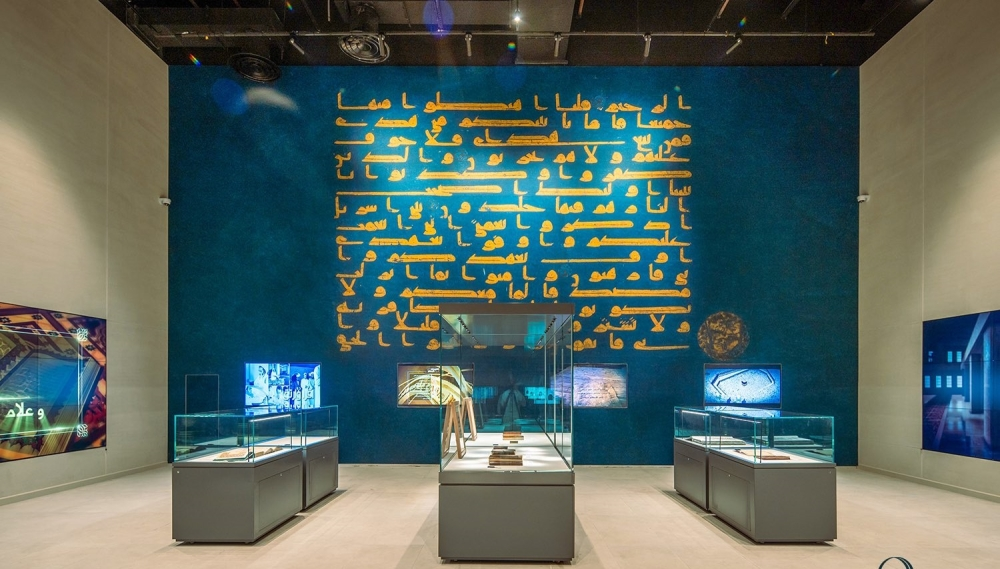
In a significant cultural development, the Museum of the Holy Qur’an, located in the Hira Cultural District of Mecca, is displaying a rare copy of the “Blue Qur’an,” one of the rarest and most exquisite Qur’anic manuscripts in Islamic history. This unique copy, containing verses from Surah Al-Baqarah (from the end of verse 37 to the beginning of verse 42), is written in pure gold ink on parchment dyed in a deep indigo blue, highlighting the beauty of the ancient Kufic script in which it was written.
The historical and artistic context of the Blue Qur'an
The Blue Qur’an is an exceptional testament to the sophistication of early Islamic art. Experts date this manuscript to the 3rd century AH (9th century CE), a period coinciding with the golden age of the Abbasid Caliphate, a time of flourishing arts and sciences. The use of gold and parchment dyed a rare and expensive blue, extracted from the indigo plant, suggests that this Qur’an was commissioned by a wealthy individual or ruler, perhaps for a grand mosque. Historians differ on where it was copied, with some studies pointing to Kairouan in Tunisia as a possible center of production, while others suggest Cordoba in Andalusia, reflecting the widespread reach of Islamic civilization.
The Kufic script used in the manuscript is one of the oldest Arabic scripts, characterized by its geometric style and sharp angles. It was the script used for copying Qur'ans in the early centuries of Islam. This Qur'an represents an evolution in the art of calligraphy, where the letters have been adapted to suit the available space in a refined and aesthetically pleasing manner, making it not only a religious text but also a work of art in its own right.
The importance of the presentation and its cultural impact
The display of this rare copy at the Museum of the Holy Quran in Mecca is of multifaceted importance. Locally , this event reinforces Mecca's status not only as a religious center but also as a global cultural and historical beacon, aligning with the goals of Saudi Vision 2030 to enrich the experience of visitors, pilgrims, and Umrah performers. It also offers citizens and residents a rare opportunity to explore an authentic part of their rich Islamic heritage.
Regionally and internationally , the “Blue Qur’an” exhibition attracts the attention of researchers, historians, and lovers of Islamic art from around the world. It highlights the efforts of the Kingdom of Saudi Arabia in preserving Islamic heritage and presenting it to the world in a contemporary style. It also contributes to fostering cultural and civilizational dialogue and offers the world a tangible example of the profound care Muslims have shown the Holy Qur’an throughout history.
This display comes as part of the ongoing efforts of the Holy Quran Museum to be a leading knowledge destination, as it includes rare manuscripts and historical copies of the Holy Quran, and uses the latest interactive technologies to tell the story of the Quran from the revelation until today, enriching the experience of visitors to the Hira Cultural District, the site associated with the beginning of the Muhammadan message.