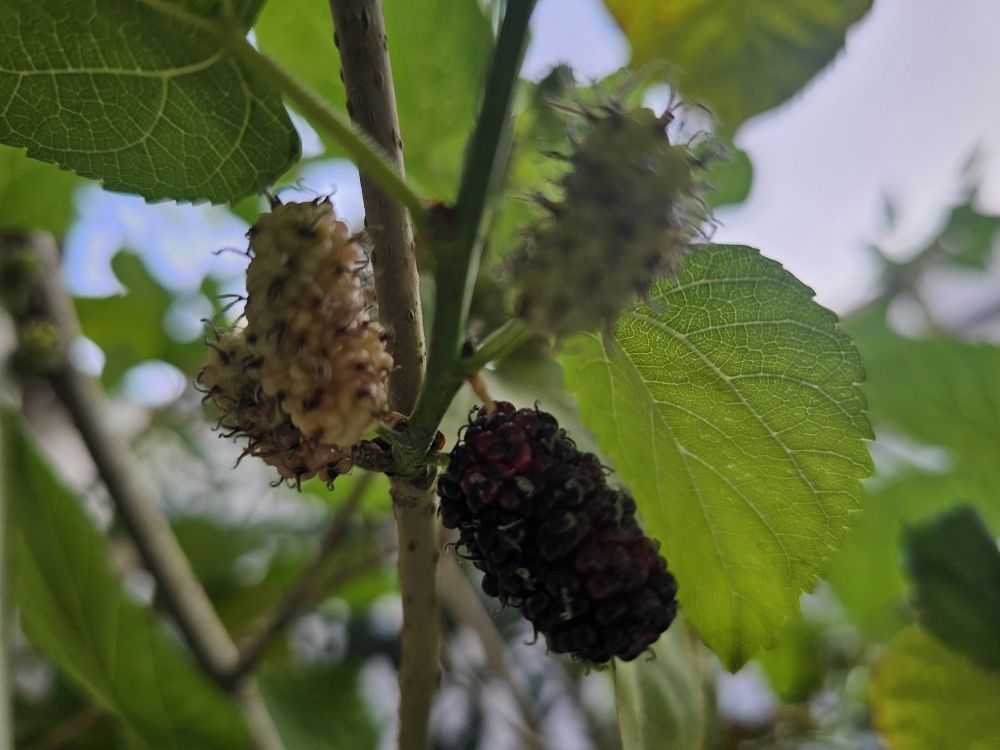
The Ministry of Environment, Water and Agriculture in the Kingdom of Saudi Arabia, specifically in its Eastern Province branch, has achieved a remarkable agricultural milestone, with blackberry production in greenhouses reaching approximately 5.26 kilograms per square meter during the spring season. This success is attributed to the use of modern grafting techniques and advanced agricultural practices, directly contributing to reducing reliance on imports, enhancing self-sufficiency, and bolstering the Kingdom's food security system. Blackberry cultivation is experiencing rapid expansion, driven by technological advancements and the diversification of varieties to meet growing domestic demand, thus providing crops of high nutritional and economic value.
Historical development of protected agriculture in the Kingdom
Returning to the general context and historical background of the agricultural sector in Saudi Arabia, we find that for decades agriculture relied on traditional methods that faced severe challenges due to the desert environment and water scarcity. With the launch of Saudi Vision 2030, the Kingdom adopted modern strategies for transitioning to smart agriculture and greenhouses. This historic shift enabled farmers to control the internal climate of greenhouses, providing an ideal environment for cultivating crops that were previously unfamiliar to the local population with the same quality and intensity, such as berries. These technologies have proven their ability to overcome the obstacles of heat and drought, making the Eastern Province a model of highly efficient resource utilization.
Economic dimensions of increased blackberry productivity
The success of this crop extends beyond the agricultural sector, encompassing far-reaching economic impacts. Locally, increased blackberry production to job creation and supports farmers in increasing their incomes, in addition to boosting agritourism in regions like Qatif and Al-Ahsa. Regionally, this production strengthens the Kingdom's position as a nation capable of achieving food security amidst global climate challenges, reducing the import bill and saving foreign currency. Furthermore, providing a fresh, high-quality local product ensures consumers receive greater nutritional benefits compared to imported products that travel long distances before reaching the market.
Variety of varieties and innovative grafting techniques
Engineer Waleed Al-Shuwaired, Director of the Agriculture Department at the Ministry's Eastern Province branch, explained that mulberries are among the early spring fruits, distinguished by their numerous varieties and colors. Local varieties include sweet white mulberries, shades of red to dark red, black mulberries rich in antioxidants, and purple mulberries. The flavor of these fruits gradually changes from tartness to sweetness as they ripen, making them appealing to all age groups. To maximize yield, farmers utilize grafting techniques to produce mulberries of different colors and sizes on a single tree. Heat- and drought-tolerant varieties have also been introduced, such as the Turkish mulberry, known for its abundant production and sweet taste. The flowering and fruiting season begins in mid-March and continues until early May.
Challenges of agriculture and organic pest control methods
Despite these successes, mulberry orchards face ongoing agricultural challenges from insect pests such as whiteflies, spider mites, and mulberry moths. Protecting the crop requires early intervention through preventative measures. Control begins with the natural planting of insect-repelling plants like mint, basil, and onions around the bushes, supplemented by covering the plants with special netting. Moderate irrigation and good drainage also play a crucial role in preventing the accumulation of moisture that attracts pests. Regular pruning helps aerate the trees and reduce insect breeding grounds. To ensure consumer safety, environmentally friendly organic pesticides, such as garlic solutions and neem oil, are used to effectively repel insects, guaranteeing a clean and high-quality crop for the market.