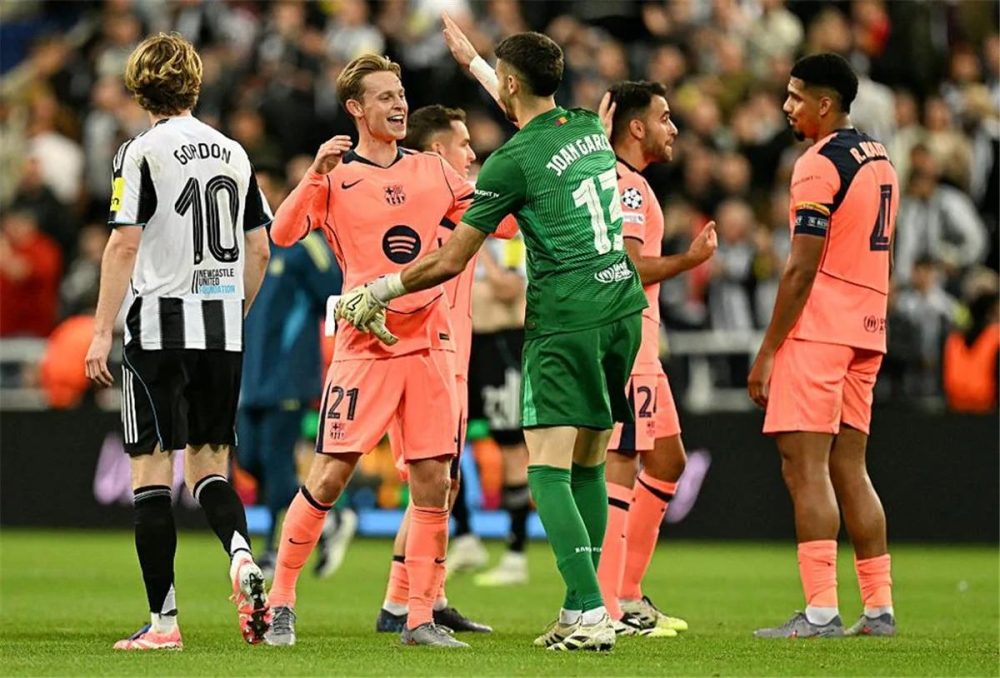
All eyes will be on the iconic Camp Nou stadium on Wednesday as Barcelona host Newcastle United in the second leg of their Champions League round of 16 tie. This match comes at a sensitive time for the Catalan club, not only on the pitch but also administratively, following Joan Laporta's decisive victory in the presidential election over his rival, Victor Font. Laporta now aims to return the team to the pinnacle of European football, and this match is considered a crucial first step on this long and challenging journey.
A history of challenges: from the financial crisis to the ambition to return
Over the past five years, the Catalan club has endured a difficult period, described by Laporta as being in "intensive care." The current administration inherited a mountain of accumulated debt that threatened the stability of the prestigious sporting institution. To address this complex situation, the administration resorted to leveraging financial resources, including selling future television broadcasting rights and parts of the club's assets to inject immediate funds. Despite criticism and fears of jeopardizing the club's future, this bold move enabled them to secure significant signings such as Robert Lewandowski, Rafinha, and French defender Jules Koundé.
Historically, Barcelona's last Champions League title dates back to 2015, when the legendary Lionel Messi led the attack at the peak of his powers. Since then, the team has suffered a series of European setbacks. Therefore, overcoming the English team today represents a crucial turning point, allowing them to turn the page on the past and build a new era based on the recently established administrative and technical foundations.
Hansi Flick's winning cards in the Barcelona vs. Newcastle United match
The odds appear even ahead of the Barcelona vs. Newcastle United match , especially after the first leg at St. James' Park ended in a 1-1 draw. Eddie Howe's side displayed considerable aggression and physical strength, making them a clear threat to Barcelona's ambitions. Newcastle will rely on exploiting the spaces behind Barcelona's high defensive line, a weakness the Catalan coaching staff are keen to address.
In contrast, German coach Hansi Flick relies on his exciting attacking style, which has brought joy back to the Blaugrana fans. Flick possesses lethal weapons capable of changing the course of any match, most notably the talented young winger Lamine Djamel and the maestro midfielder Pedri González, both considered among the best players in the world in their respective positions. Flick's success in leading the team hinges on a delicate balance between a relentless attack and a solid defense to avoid surprises from the visitors.
Dimensions of the confrontation: an impact that extends beyond the boundaries of the green rectangle
The importance of this match extends far beyond simply qualifying for the quarterfinals; it carries profound strategic and economic dimensions. Domestically and regionally, a victory would send a powerful message to rivals that Barcelona has recovered and is ready to dominate once again. Internationally, progressing in Europe's most prestigious club competition would enhance the club's brand and attract more sponsors, a crucial factor given the ongoing renovation of the Camp Nou stadium, which will eventually accommodate 105,000 spectators.
Moreover, the match takes on a special dimension as it represents a clash of modern economic models in football. Barcelona, relying on its own revenue and debt management, faces Newcastle United, backed by massive investments. Laporta believes his club's financial situation is now better and more competitive with these clubs with huge budgets. Overcoming this difficult test will prove the club president's prediction that the fans will experience "the best years of their lives in the next five years," and will serve as an official declaration of the Catalan giant's return to its rightful place among the elite of European football.