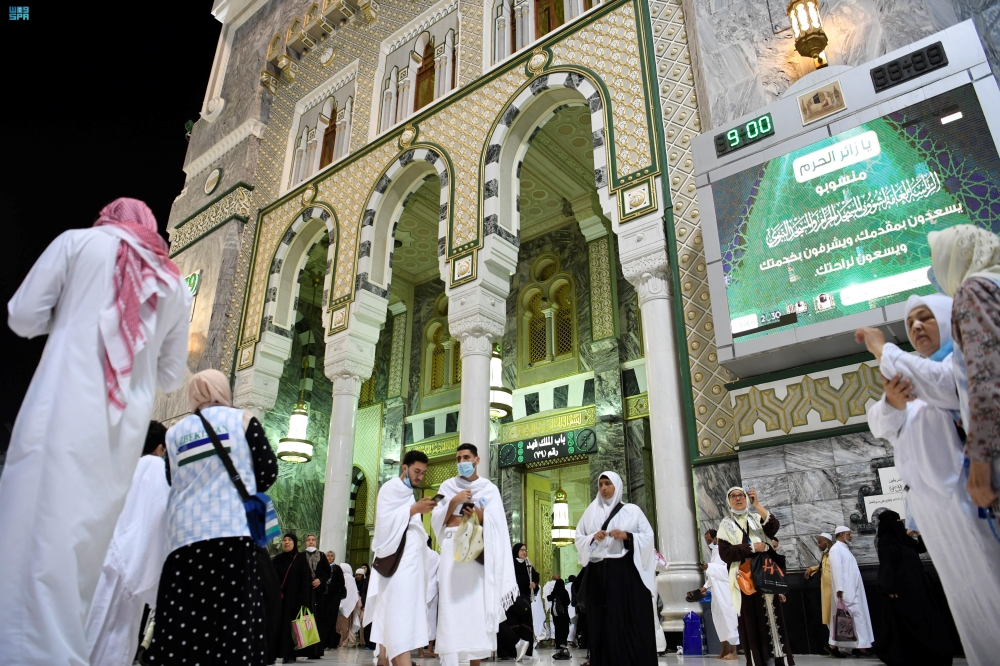
The National Center for the Development of the Non-Profit Sector has issued strict directives prohibiting members of charitable organizations and institutions from taking photographs inside the Two Holy Mosques or using their sacred symbols in media materials without prior official approval. This decision comes as part of the efforts of relevant authorities to regulate the organizational landscape within the holy sites and ensure that the spiritual significance of the Grand Mosque and the Prophet's Mosque is not exploited for promotional activities that could disturb the tranquility of the place.
The sanctity of place and the challenges of the digital age
The holy sites of Mecca and Medina possess unparalleled historical and religious significance, having remained throughout the ages a sanctuary for those seeking tranquility and devotion. With rapid technological advancements and the proliferation of social media, new challenges have emerged, namely the increasing phenomenon of visual documentation that sometimes deviates from the sanctity of these places. Therefore, regulating photography within the Two Holy Mosques is no longer merely an administrative procedure, but an urgent necessity to preserve the historical sanctity of these sites and ensure they are not transformed into backdrops for advertising or promotional materials that would diminish their spiritual essence.
Details of the ban and new regulations
The new directives included a strict ban on using the name or images of the Two Holy Mosques, particularly the Kaaba, in any media activities of non-profit organizations. The decision also prohibited the use of images of employees of the General Authority for the Care of the Grand Mosque and the Prophet's Mosque, or the highlighting of its services, in marketing campaigns by associations. This was done to avoid any overlap in regulatory jurisdictions and to affirm the Authority's sovereign responsibilities in managing the affairs of pilgrims.
Dimensions of the decision and its impact on the pilgrims
The impact of this regulation extends beyond the local level to encompass regional and international dimensions, given the Kingdom's status as the Qibla for Muslims. Regulating photography within the Two Holy Mosques to enhancing the experience of visitors and pilgrims from around the world, ensuring an environment free from visual and commercial distractions. This approach aligns directly with the objectives of the Kingdom's Vision 2030, which aims to host millions of Hajj and Umrah pilgrims annually while providing the highest quality services befitting the sanctity of the time and place, thus reinforcing the positive image of the services offered at the Two Holy Mosques.
A vast system under regulatory scrutiny
These decisions are of exceptional importance given the size of the targeted sector, as the new regulations apply to 7,498 supervisory entities. These entities, subject to the regulations, include 5,889 non-profit organizations, 995 family funds, and 614 charitable foundations. The center continues its pivotal role in the financial and administrative oversight of this extensive system, ensuring its governance according to the highest international standards, in constant coordination with government agencies to guarantee smooth operations and foster an atmosphere of reverence and tranquility for worshippers.