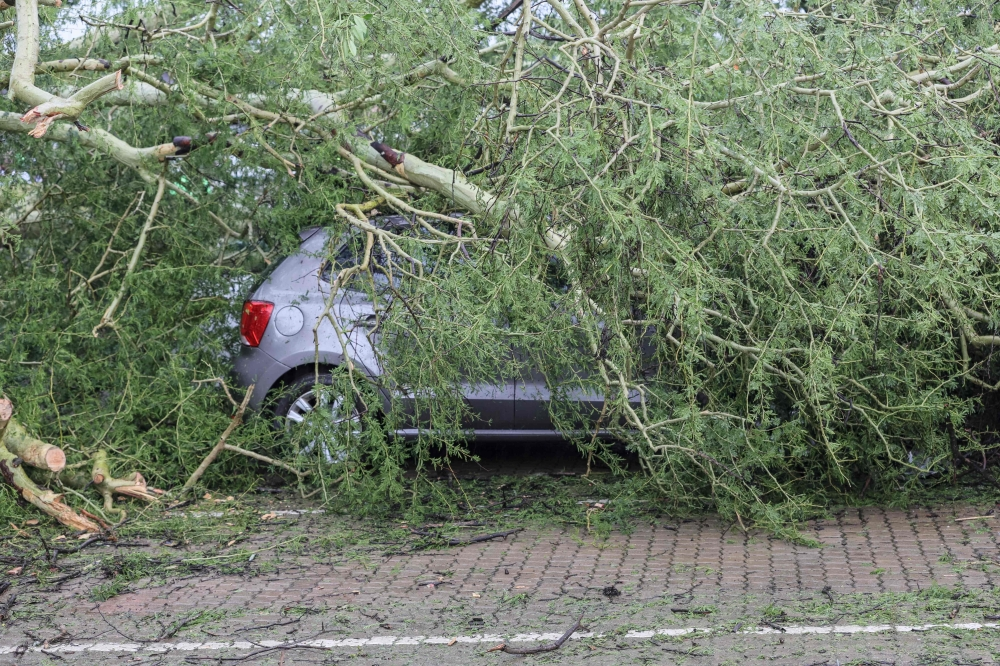
Australian emergency services issued urgent warnings to residents in the east of the country on Friday, urging them to take maximum precautions in preparation for an extreme weather event that could bring sudden heavy rainfall and dangerous bushfires simultaneously. This heightened state of emergency response comes after flash floods swept several cars into the sea, highlighting the severity of the climate changes affecting the continent.
Flash floods and record numbers
Heavy rains on Thursday triggered flash floods that swept across large parts of eastern Victoria, a state where firefighters are still battling ten major bushfires. Local media and online videos captured harrowing scenes of cars being tossed about in muddy, raging waters originating from the Wye River southwest of Melbourne, before ending up in the ocean.
In the context of weather monitoring, the Bureau of Meteorology in the state of Victoria reported that the region recorded record rainfall rates, with the amount of precipitation at one monitoring point reaching about 186 millimeters during the past twenty-four hours until Friday morning. Most of these amounts were concentrated during Thursday, which put enormous pressure on infrastructure and natural waterways.
Complex climate challenges: between fire and water
Australia is experiencing a stark contrast in weather patterns, further complicating the work of rescue teams. Tim Wibush, an emergency management official, described the situation to reporters, saying, "We've had an extreme heatwave, followed by catastrophic bushfires, and now we're facing massive flash floods in the southwest of the state." This statement highlights the dual challenge facing authorities, as dealing with both fires and floods requires simultaneous, conflicting strategies.
Historically, Australia has been known to experience periodic extreme weather events, often oscillating between severe droughts that fuel bushfires (as happened in the 2019-2020 Black Summer) and periods of heavy rainfall associated with La Niña. This rapid succession of droughts and floods makes the soil less able to absorb water, exacerbating the risk of flash floods.
Evacuation of tourists and damage to infrastructure
On the ground, officials confirmed that the flash flood severed a vital main road in the state, temporarily isolating some areas. The floods also forced approximately 300 people to urgently evacuate their holiday campsites, where they were staying in caravans near the affected areas. One child was injured and airlifted to a hospital for treatment.
Eyewitnesses from the camps recounted the terrifying moments they experienced, noting that the rise in water levels was extremely sudden. One of them described the scene as the water "rose suddenly and with lightning speed," which did not leave them enough time to gather their belongings, stressing the seriousness of the situation and the need to adhere to the safety instructions issued by the local authorities.