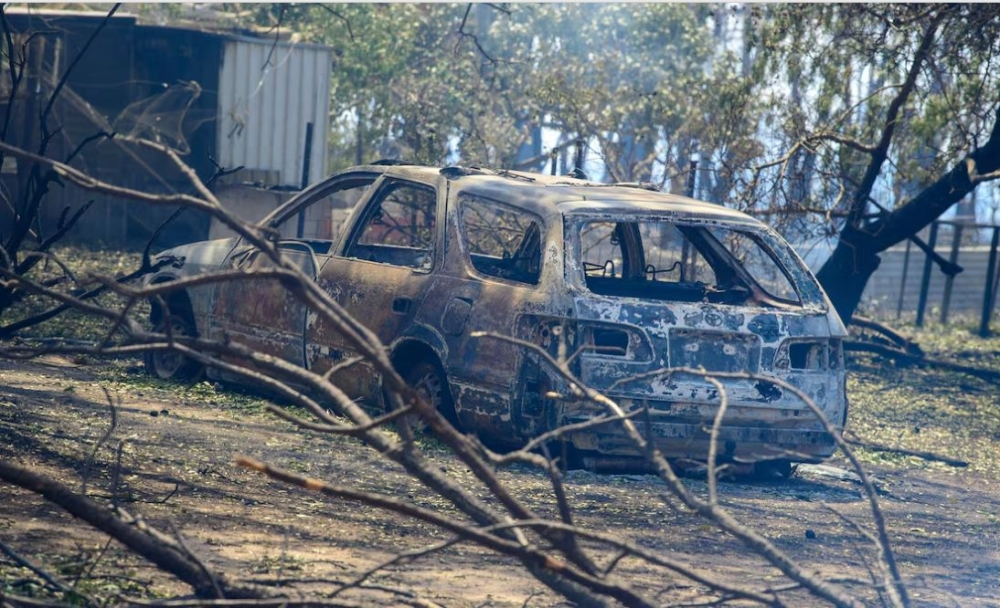
Australian authorities on Saturday declared a state of disaster in the southeastern parts of the country, specifically in the state of Victoria, in response to escalating and out-of-control bushfires that have destroyed homes and vast areas of forest in rural regions.
Heat wave and harsh weather conditions
The state of Victoria, and its capital Melbourne, are facing extreme weather conditions that have fueled wildfires. A severe heatwave has hit the region, with temperatures exceeding 40 degrees Celsius. This high temperature, coupled with hot, strong winds, has created ideal conditions for the rapid spread of fires, in a scene reminiscent of the "Black Summer" that struck the country in late 2019 and early 2020, leaving behind unprecedented environmental devastation.
Details of the losses and the field situation
Field reports indicate that one of the deadliest fires has consumed nearly 150,000 hectares near the town of Longwood, an area renowned for its dense native forests. In an initial assessment of the damage, Tim Wibush, Victoria's emergency manager, stated that the fire destroyed at least 130 structures, ranging from houses and cottages to other rural buildings.
Although the worst fires are currently confined to sparsely populated rural areas, authorities have mobilized hundreds of firefighters from across Australia, backed by heavy machinery and firefighting aircraft, in an attempt to control 10 large fires that are still burning, with some expected to continue for days or even weeks.
Urgent government measures
Under the declaration of a "state of disaster," Victorian Premier Jacinta Allen granted broad and exceptional powers to firefighters and emergency services, including the ability to carry out mandatory evacuations to ensure the safety of residents. Allen delivered a firm message to citizens: "The goal is to protect the lives of Victorians... If you are told to leave, leave immediately." Meanwhile, authorities announced they had located three people, including a child, who had been reported missing in the fire zones.
Historical context and climate change
These fires are particularly significant and dangerous given Australia's historical and climatic context. Australians still vividly remember the devastating 2019-2020 bushfires that destroyed millions of hectares and killed or displaced billions of animals. Experts indicate that the recurrence of such extreme events is no longer an isolated incident, but a direct consequence of climate change.
According to researchers' data, the rate of climate warming in the Australian continent has increased by 1.51 degrees Celsius since 1910. This continued rise in temperatures is leading to an increase in the frequency of extreme weather patterns, both on land and at sea, making fire seasons longer and more destructive, and posing enormous economic and environmental challenges to the Australian government and society in the coming years.