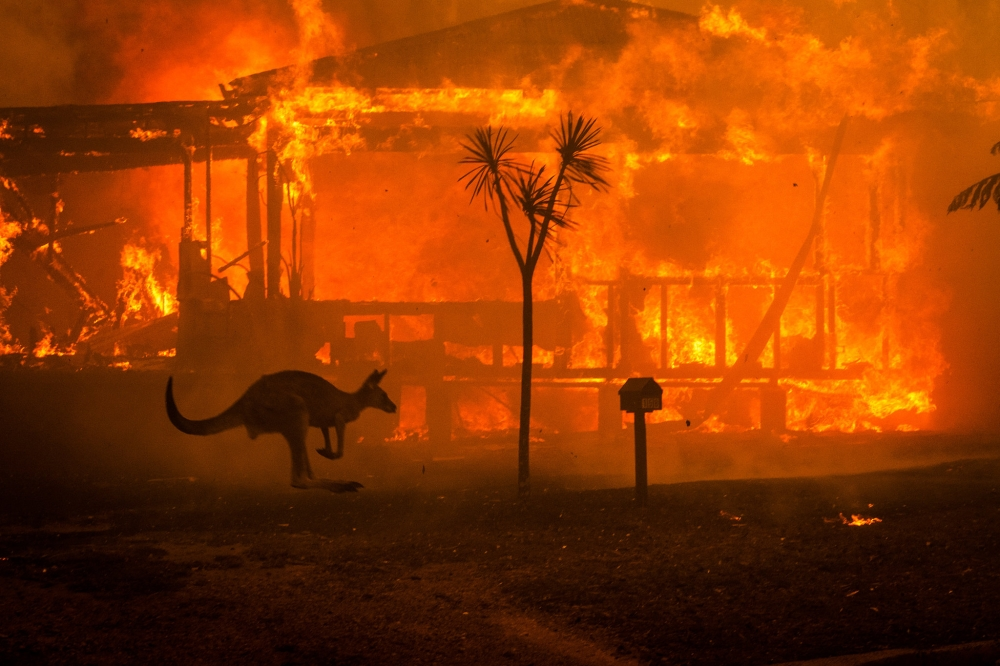
The Australian state of Victoria witnessed a wave of forced evacuations today in an urgent response to the worsening bushfires that have spiraled out of control in dense forests and scrubland. These rapidly escalating developments prompted local authorities and emergency teams to issue dire warnings, indicating that the situation is poised to reach the "catastrophic" fire danger level by tomorrow, Friday, the highest level on the fire severity scale.
Hotspots and high temperatures
Efforts are currently focused on containing two large wildfires raging in forested areas near the towns of Longwood and Walloa. These fires coincide with a severe heat wave gripping the state, with temperatures exceeding 40 degrees Celsius in some areas, creating ideal conditions for rapid fire spread and making it difficult for firefighters to control the flames. Initial reports from authorities confirm that the fires have already destroyed at least two structures, with concerns that the damage could spread further.
The specter of "Black Summer" returns to the forefront
In a related context, meteorologists explained that current weather conditions are alarmingly similar to those experienced in the region during the 2019-2020 season, known globally as the "Black Summer." That tragic period remains etched in the memory of Australians, as fires ravaged millions of hectares of land in southeastern Australia, resulting in the deaths of 33 people and the loss or injury of nearly three billion wildlife, creating an unprecedented environmental catastrophe.
Implications of the "catastrophic" classification
Raising the alert level to "catastrophic" is a rare measure taken by authorities only when there is an imminent threat to life and property that cannot be averted by conventional means. This classification means that homes, even those designed to be fire-resistant, may not offer adequate protection to their occupants under these extreme conditions. Therefore, authorities emphasize that the safest option is to leave the threatened areas early, before roads become impassable.
Climate change and the increasing frequency of disasters
These fires have once again highlighted the impacts of climate change on Australia, one of the driest and most fire-prone continents. Scientists warn that rising global average temperatures are leading to longer and more intense fire seasons, necessitating long-term adaptation strategies that go beyond emergency disaster response to include urban and environmental planning that takes these accelerating changes into account.