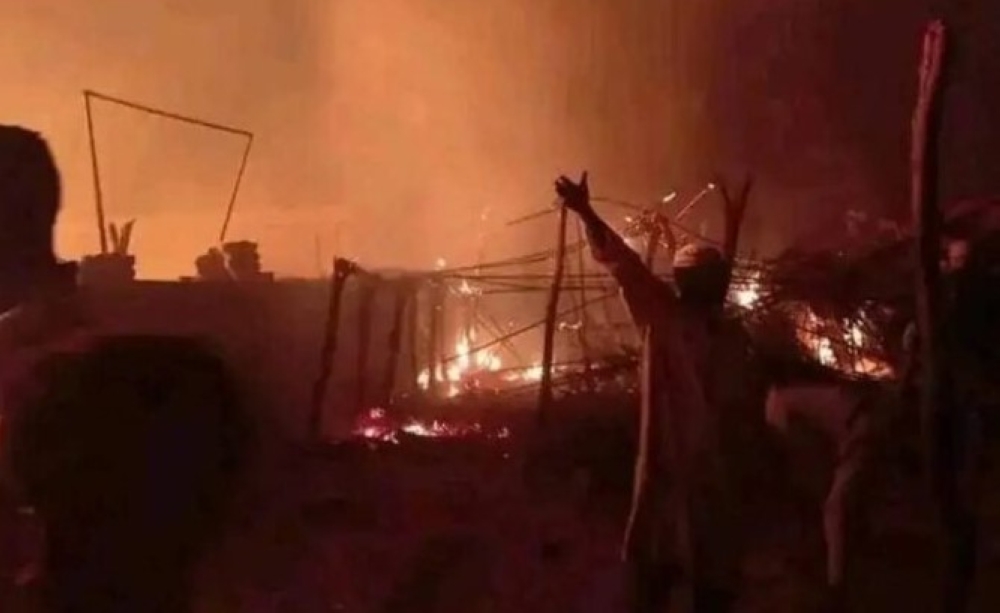
The World Health Organization (WHO) has announced a tragic toll following an attack on a hospital in Sudan , where 64 people, including 13 children, were killed and dozens more were injured. This horrific attack on Al-Daein Teaching Hospital in the capital of East Darfur state represents a dangerous escalation in the ongoing conflict. The UN agency urgently called for the protection of civilians and health and humanitarian workers, warning that the entire health system could collapse if such attacks continue.
In detailing the incident, the Director-General of the World Health Organization, Tedros Adhanom Ghebreyesus, issued a statement via the X platform confirming that the organization had verified a new attack targeting healthcare facilities. He explained that the attack resulted in the loss of innocent lives, including two nurses and one doctor, as well as a large number of patients receiving treatment. The organization's attack monitoring system indicated the use of heavy weapons in this intense bombardment, which damaged a secondary healthcare facility and destroyed vital medical supplies and warehouses.
Roots of the conflict: How did the humanitarian crisis worsen?
To understand the dimensions of this deterioration, it is necessary to consider the broader context of events. Since mid-April 2023, Sudan has been embroiled in a brutal and ongoing war between the Sudanese Armed Forces and the Rapid Support Forces. This armed conflict did not erupt in a vacuum, but rather resulted from a complex accumulation of political and military factors. These violent battles have led to the deaths of tens of thousands of civilians and the destruction of essential infrastructure, including water and electricity networks and hospitals. The Rapid Support Forces currently control large parts of the Darfur region in the west of the country, while the Sudanese army is concentrated in most of the east, center, and south, creating a geographical division that is unprecedentedly complicating relief efforts.
The repercussions of any attack on a hospital in Sudan and its regional impact
The repeated attacks on hospitals in Sudan are not merely a local loss; they have catastrophic repercussions at the regional and international levels. Locally, the destruction of health facilities deprives millions of Sudanese of essential medical care, exacerbating the spread of epidemics and infectious diseases amidst a severe shortage of medicines and medical supplies. Regionally, these tragic circumstances force hundreds of thousands of citizens to flee to neighboring countries in search of safety, placing immense strain on those countries' economic and security resources and threatening the stability of the entire region. Internationally, these violations present the international community with a true test of its ability to enforce international humanitarian law and protect civilians in conflict zones.
UN calls to stop the bloodshed
In a related development, the United Nations Office for the Coordination of Humanitarian Affairs (OCHA) in Sudan expressed its deep dismay at these horrific attacks. Tedros Adhanom Ghebreyesus, Director-General of the World Health Organization (WHO), condemned what he described as the ongoing bloodshed and suffering, calling on all parties to the conflict to de-escalate the crisis immediately. It should be noted that while the WHO is transparently documenting attacks on health facilities, it lacks the authority to assign blame as it is not a criminal investigation body. Nevertheless, the staggering figures—more than 11 million people displaced and a famine that the UN classifies as one of the worst in the world—remain a stark testament to the urgent need for life-saving intervention in Sudan.