A close and reassuring astronomical passage
Engineer Majed Abu Zahra, head of the Jeddah Astronomical Society, confirmed that Earth is set to witness a remarkable astronomical event on Tuesday, February 17, 2026, when a newly discovered small asteroid, designated 2026 CR2, will pass close to our planet. Abu Zahra explained that this passage will be completely safe and poses no threat or danger whatsoever, providing a unique opportunity for scientists and amateur astronomers to observe and study this celestial body.
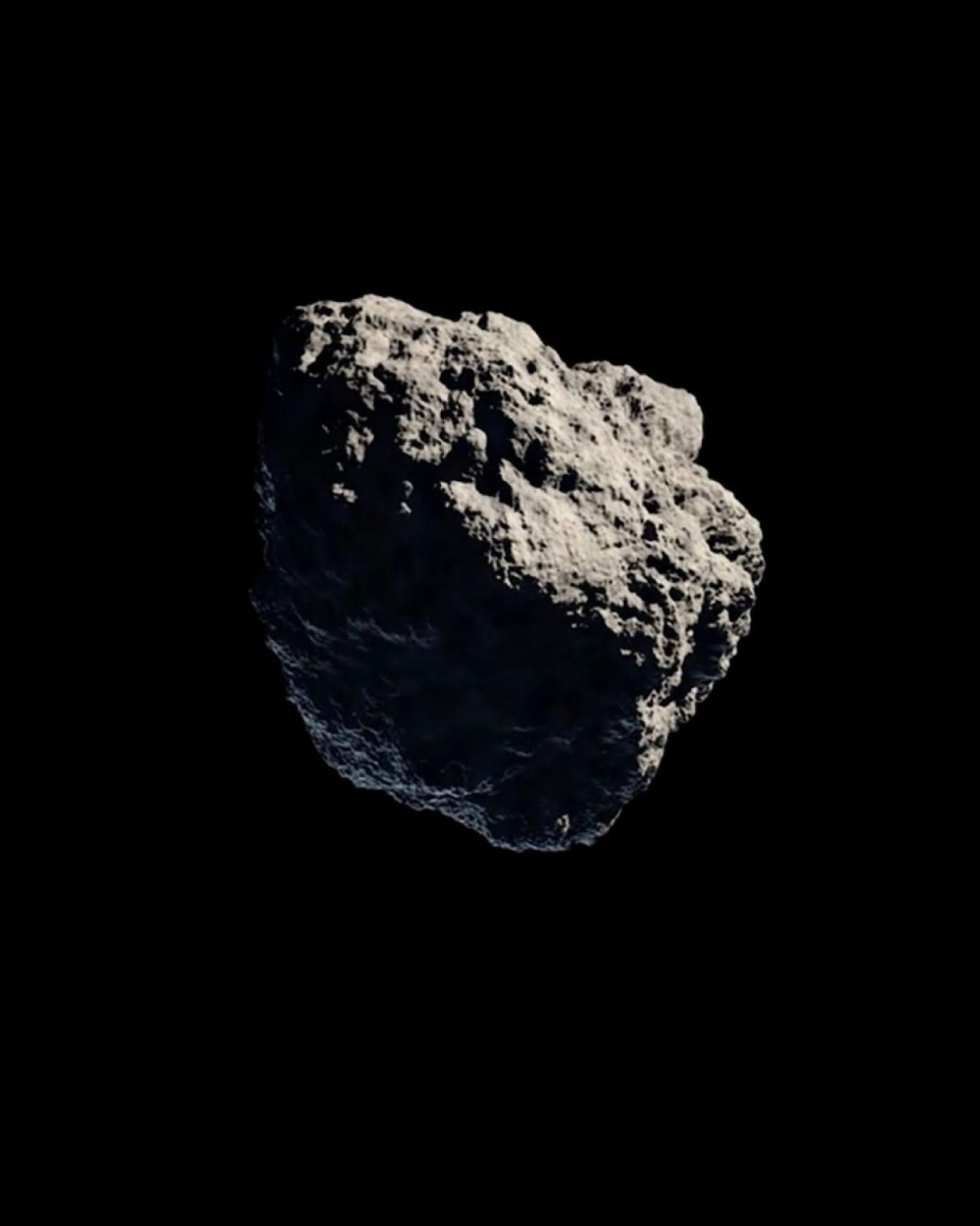
The asteroid, which is only about 3 meters in diameter, will reach its closest point to Earth at a distance of approximately 136,500 kilometers. To put this into perspective, this distance is less than half the average distance between the Earth and the Moon (about 385,000 kilometers). Despite this relative proximity by astronomical standards, its trajectory has been precisely calculated, confirming that there is no possibility of a collision.
General context: Near-Earth objects and planetary defense
Asteroid 2026 CR2 is classified as a Near-Earth Object (NEO), a class of asteroids and comets whose orbits bring them close to Earth's orbit. Global space agencies, most notably NASA through its Center for Near-Earth Object Studies (CNEOS), continuously monitor thousands of these objects to determine their trajectories and assess any potential future threats. Passing by small objects like this asteroid is a common occurrence; many cross Earth's vicinity annually without being detected.
These monitoring efforts are of paramount importance within the framework of “planetary defense,” a scientific field aimed at protecting Earth from potential impact threats. Past incidents, such as the Chelyabinsk meteor explosion over Russia in 2013, serve as a constant reminder of the importance of preparedness. Monitoring small objects like 2026 CR2 provides excellent practical training for global observation and tracking networks, enhancing their ability to detect larger and more dangerous objects at an early stage.
Scientific significance of the event
Despite its small size, this asteroid holds immense scientific value. Scientists describe these objects as “time machines” because they are pristine remnants of the nebula from which our solar system formed approximately 4.6 billion years ago. Their composition has remained largely unchanged since then, meaning that studying them offers a direct window into the distant past and helps us understand how planets, including Earth, formed.
As Abu Zahra pointed out, detecting and tracking these small asteroids presents a significant technical challenge due to their high speed and small size; they can only be detected when they come very close to Earth. Therefore, each successful detection represents a scientific and technological achievement that contributes to improving our orbital models and observation techniques. In the unlikely scenario of an object entering the atmosphere, it would burn up completely and become a bright fireball (meteor), a phenomenon that occurs naturally several times a year without causing any harm.