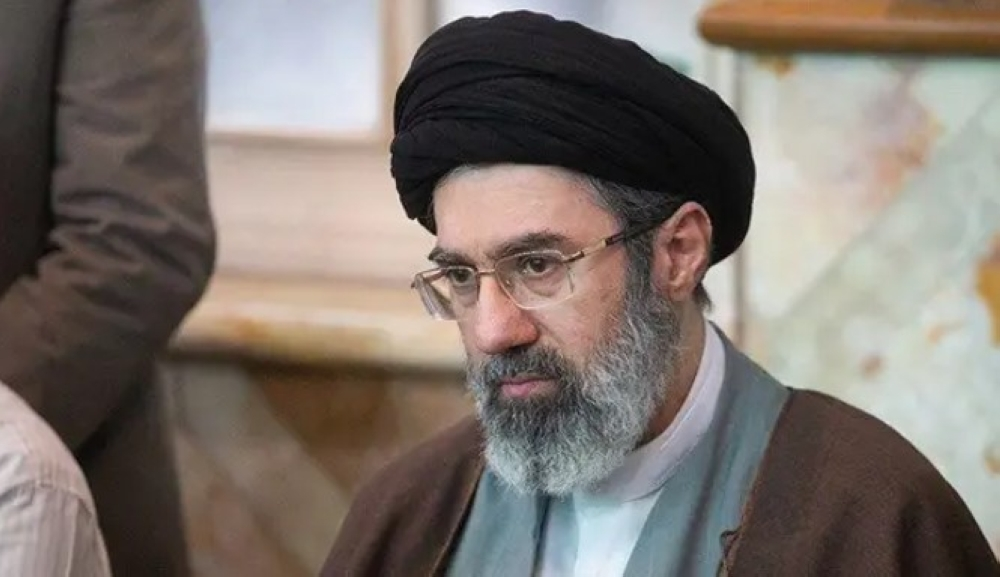
In a significant and pivotal political development in the history of the Islamic Republic, Iranian media outlets, most notably the Tasnim News Agency, reported that the Assembly of Experts had made a decisive decision approving the selection of Mojtaba Khamenei as the Supreme Leader of Iran, succeeding his father, Ayatollah Ali Khamenei. This announcement comes at a time of unprecedented geopolitical tensions in the region, making the issue of succession at the top of the Iranian leadership a matter of global interest. The transfer of power in Iran is not merely an internal matter; it is an event with profound strategic dimensions that will affect regional and international balances of power.
Historical background and the role of the Council of Experts in the power structure
To understand the nature of this transformation, one must examine the unique political structure established after the 1979 Islamic Revolution by Ayatollah Ruhollah Khomeini. The position of “Supreme Leader” represents the highest political and religious authority in the country, holding the final say on foreign and domestic policies and controlling the armed forces, including the Islamic Revolutionary Guard Corps (IRGC).
The Assembly of Experts, an elected body of dozens of clerics and jurists, holds the crucial constitutional responsibility of appointing and dismissing the Supreme Leader. For decades, particularly since Ayatollah Ali Khamenei assumed office in 1989, the question of his succession has been a subject of constant speculation, especially given his advancing age. Several names have emerged in political circles, but the choice of a figure with extensive influence within the established institutions has always been the most likely option to ensure the regime's continuity.
The expected repercussions of Mojtaba Khamenei's rise to power
The appointment of Mojtaba Khamenei to this sensitive post carries far-reaching implications. Domestically, he is known for his strong and extensive network of ties with the Iranian Revolutionary Guard and security institutions, meaning his leadership could further consolidate the hardline conservative faction's grip on the levers of power. This internal cohesion is crucial for the Iranian regime in the face of the economic and social challenges plaguing the country as a result of mounting international sanctions.
Regionally, Iran’s strategic approach of supporting what is known as the “axis of resistance” in the Middle East is expected to continue. The new leadership will find itself facing complex issues requiring careful management, ranging from Iranian influence in Iraq, Syria, Lebanon, and Yemen to the open and covert confrontation with Israel. The stability of the leadership in Tehran will reassure its allies in the region regarding the continuation of financial and military support.
On the international stage, this change at the top of the power structure will impose a new reality on Western powers, particularly the United States and European countries. The Iranian nuclear program, the central point of contention between Tehran and the West, will remain under the direct supervision of the new Supreme Leader. While Iran's major policies have remained relatively stable, its approach to governance and negotiation may undergo tactical shifts to align with the new leadership's vision of Iranian national interests within a global system moving toward multipolarity.