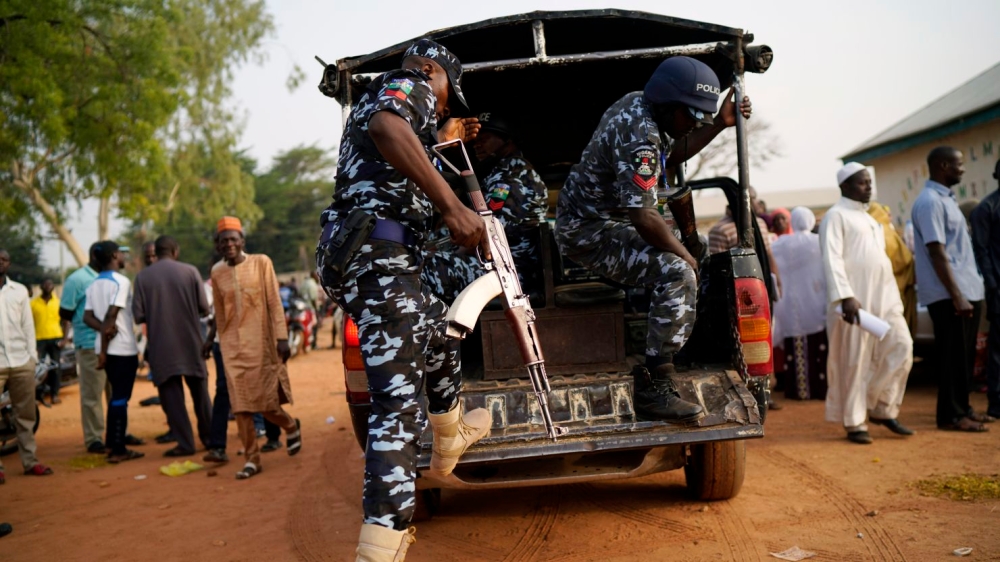
Official security sources announced an armed attack in Nigeria that left 13 people dead, marking a new escalation in violence that threatens the country's stability. Specifically, 11 soldiers, a police officer, and one civilian were killed in a treacherous ambush by armed terrorist elements in the northwestern region of the country. This tragic incident occurred on Tuesday evening when a military patrol was conducting its routine duties near its base in the Shanga area of the state, highlighting the ongoing security challenges faced by law enforcement in these volatile regions.
Historical context and escalating violence
This incident was not an isolated event, but rather the culmination of a long series of security tensions that have plagued the country for years. Historically, Nigeria has suffered from the activities of numerous armed groups, most notably Boko Haram and the Islamic State West Africa Province (ISWAP), whose attacks were initially concentrated in the northeast before expanding and inspiring other groups in the northwest. Initial reports indicate that the perpetrators of this latest attack are suspected to belong to the Lakurawa extremist group, one of the armed factions that has recently emerged in Nigeria's complex security landscape. These groups exploit the rugged terrain and dense forests, using them as safe havens from which to plan and execute attacks against both government forces and unarmed civilians.
The repercussions of an armed attack in Nigeria on local security
The recurring armed attacks in Nigeria have serious local repercussions. On the one hand, targeting security and military forces weakens morale and increases the strain on available military resources. On the other hand, local communities live in a state of constant fear, forcing thousands to flee their villages and homes in search of safety. This mass displacement creates dire humanitarian crises, with camps lacking even the most basic necessities such as food, medicine, and shelter, and disrupting the economic and agricultural activities upon which local populations depend for their livelihoods.
Regional and international impact of the security crisis
The effects of these attacks are not confined to national borders, but extend to pose a direct threat to regional security in the Sahel and West Africa in general. Nigeria is a major economic and demographic power on the continent, and any instability there negatively impacts neighboring countries, facilitating the movement of smuggled weapons and fighters across its porous borders. Internationally, these developments are raising concerns within the international community and global organizations that invest significant resources in combating terrorism. Furthermore, the continued security instability directly affects the climate for foreign investment and hinders the sustainable development efforts that the Nigerian government and its international partners are striving to achieve in the region.