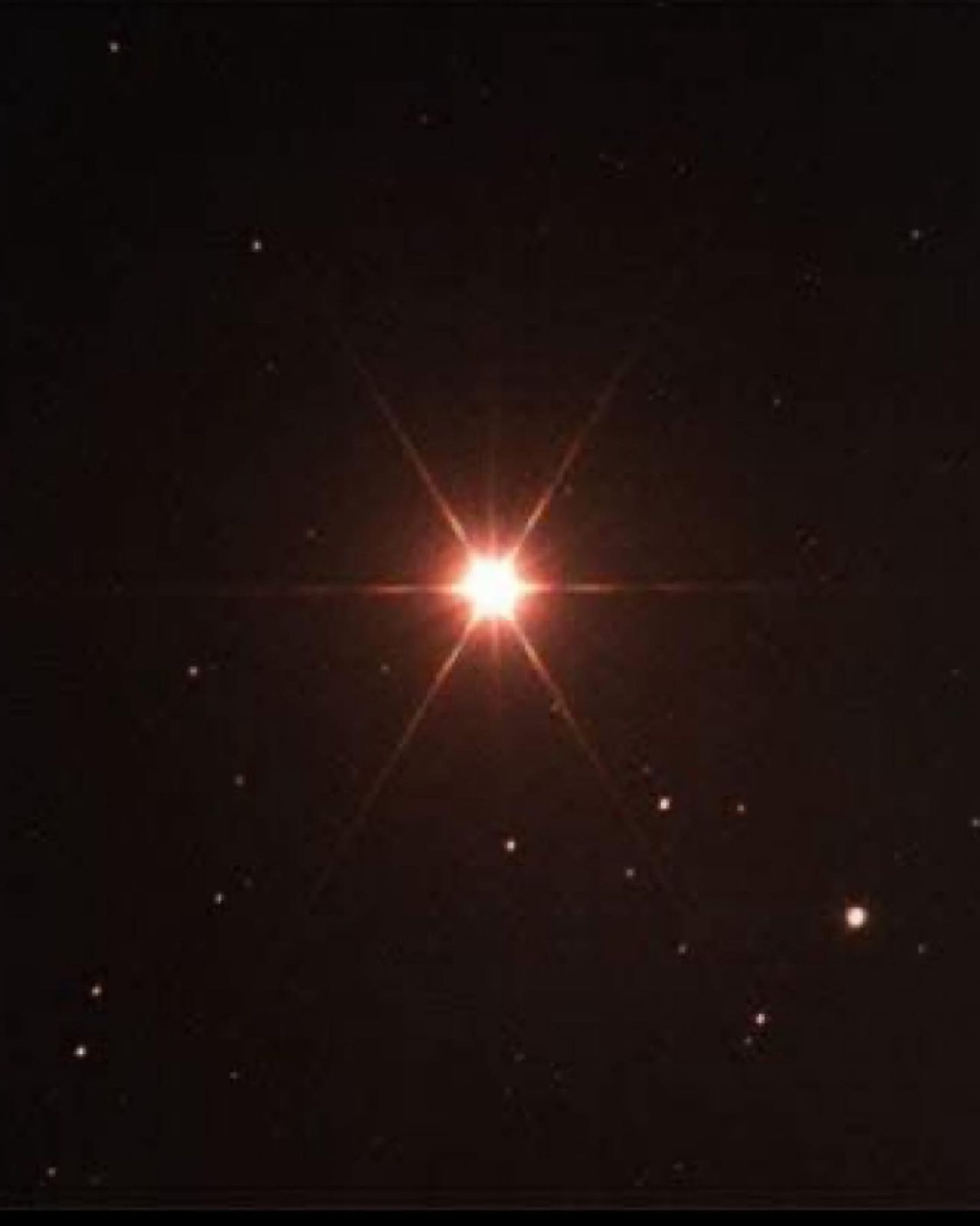
The Jeddah Astronomical Society, through its president, Engineer Majid Abu Zahra, announced that the skies of the Arab world will witness a remarkable astronomical event on the evening of Wednesday, March 18, 2026, when astronomy enthusiasts will be able to observe the bright star Spica shining brightly on the eastern horizon. This beautiful spectacle will begin to appear around 9:00 PM local time, coinciding perfectly with the approach of the spring equinox at the end of the week. It should be noted that there may be slight variations in the timing of its appearance depending on the observer's geographical location.
The historical significance of the emergence of the star Arcturus
The star Arcturus carries a profound historical and cultural legacy, particularly in ancient Arab tradition. Known since antiquity as "the Shepherd" or "Guardian of the Sky," it is the most prominent and luminous star in the constellation Boötes. Historically, ancient Arab peoples and sailors relied on such bright stars as celestial compasses to determine directions and agricultural seasons. Tracking the movement of stars was not merely a hobby, but a vital necessity for organizing trade caravans and determining harvest times. This giant star, located approximately 37 light-years from Earth, is among the oldest stars whose movements have been studied and documented in ancient astronomical manuscripts, making it a bridge between modern astronomy and the heritage of our ancestors.
Notable astronomical characteristics and regional influences
Astronomically, this star is the fourth brightest in the night sky, after Sirius, Canopus, and Alpha Centauri. What truly distinguishes it is its remarkable brilliance and its yellow-orange hue, which makes it appear particularly luminous as it approaches the horizon. This optical oscillation occurs due to the star's light passing through the Earth's atmosphere in varying temperatures, a phenomenon that gradually fades as the star rises higher in the sky. Regionally and locally, the appearance of this star presents a golden opportunity to promote astronomical tourism in the Arab world. Observatories and astronomical societies actively organize group observation events, contributing to the dissemination of scientific awareness and educating younger generations about the structure of the universe and the movement of celestial bodies.
Significance of coinciding with the spring equinox
Engineer Abu Zahra confirmed that observing this star in the evening sky during mid-March is a well-established astronomical sign. For inhabitants of the Northern Hemisphere, it is associated with the approach of spring and the vernal equinox, the period after which the length of the day gradually increases at the expense of the night. However, it is essential to emphasize that this association is purely chronological; the star has no direct physical influence on the succession of the four seasons, which occur primarily due to the tilt of the Earth's axis of rotation during its annual orbit around the sun.
Guidelines for observing the star in the coming weeks
For those interested in observing this phenomenon, the star, like other celestial bodies, rises about four minutes earlier each day. This daily variation is due to the Earth's rotation around the sun, causing it to gradually appear closer to sunset over successive weeks. The star reaches its highest point in the sky around midnight and remains clearly visible until just before sunrise. Its distinctive position and remarkable brightness make it a natural astronomical landmark, easily used by those interested in tracking the movement of the sky, thus reaffirming the magnificence and precision of the amazing cosmic order.