The competitions kicked off amid great public anticipation
The Arab Cup returns to Qatar for the second consecutive year, bringing with it the hopes and aspirations of Arab national teams to achieve regional football glory. Algeria, the defending champions, enter the tournament with a clear objective: to retain the trophy they won in the historic 2021 edition, the first to be held under the auspices of FIFA. Meanwhile, other teams such as the UAE, Iraq, and Jordan are looking to use the tournament as an opportunity to prove themselves and overcome recent disappointments.
Algeria and the old guard: A strategy to retain the title
The Algerian national team, nicknamed the "Desert Warriors," begins its title defense against Sudan, relying on a seasoned squad called up by coach Madjid Bougherra. The roster includes prominent names such as all-time top scorer Islam Slimani, along with Yacine Brahimi and Youcef Atal, reflecting the coaching staff's desire to balance experience with promising youngsters like Adam Ounas and Amir Sayoud. Winning the 2021 title with a largely reserve squad has instilled significant confidence in Algerian football's depth of options, but Bougherra is aware that the task will not be easy, stating: "Everyone is watching us closely; when they face Algeria, they will play at a much higher level." Meanwhile, the Sudanese national team, the "Falcons of Jediane," enters the match with high morale under the guidance of Ghanaian coach Kwesi Appiah, who previously eliminated Algeria's local-based team, adding a revenge element to the encounter.
Iraq and Bahrain: Renewed ambitions in the group of death
In the same group, Iraq, the record holder for the most titles (4), will face Bahrain. The "Lions of Mesopotamia" are riding high after securing a place in the intercontinental play-off for the 2026 World Cup, and coach Graham Arnold hopes to capitalize on this positive momentum. Despite the absence of some professional players, the squad relies on key players such as goalkeeper and captain Jalal Hassan and forwards Ayman Hussein and Mohanad Ali. Bahrain, runners-up in the 1985 and 2002 editions, are looking to bounce back from their early exit in the last tournament and deliver a performance worthy of their history in the competition.
The UAE and Jordan: Between overcoming frustration and reliving memories
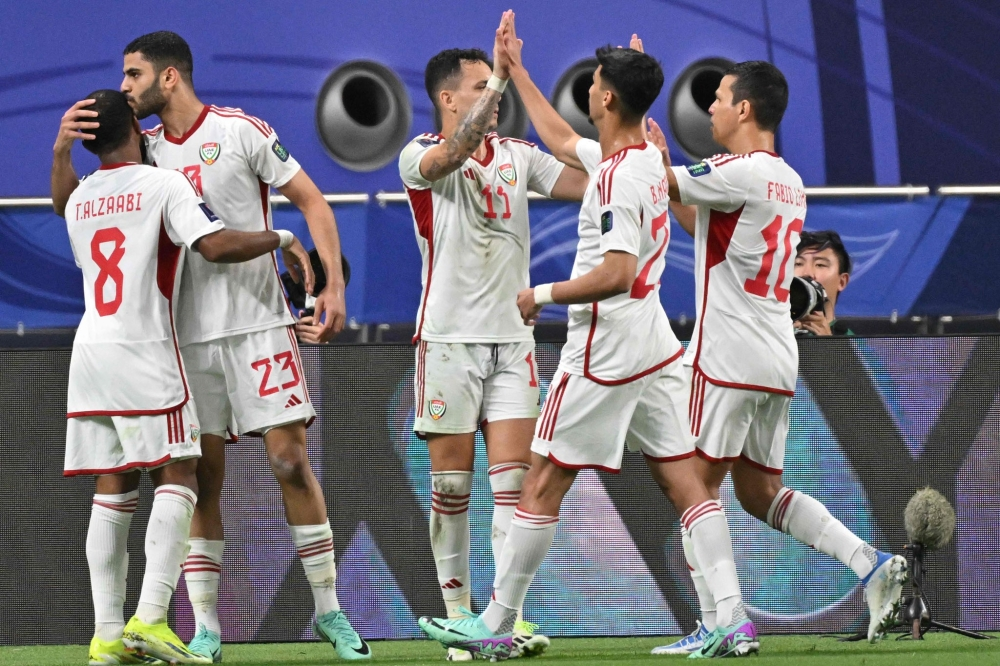
The UAE enters the tournament with one primary goal: to overcome the profound disappointment of failing to qualify for the 2026 World Cup. The tournament presents a genuine opportunity for the naturalization program to prove its effectiveness, as the squad includes several naturalized players on whom Romanian coach Cosmin Olăroiu is relying to rebuild confidence. Defender Lucas Pimenta emphasized that "the Arab Cup is extremely important and it's an opportunity for us to regain our self-belief." Meanwhile, the Jordanian national team, "Al-Nashama," enters the competition with sky-high morale, recalling their historic achievement of reaching the final of the 2023 AFC Asian Cup on Qatari soil. Despite the absence of their star player, Musa Al-Taamari, coach Jamal Sellami is confident in the current squad's ability to go far, relying on players like Yazan Al-Naimat and Ali Alwan to deliver a strong performance.