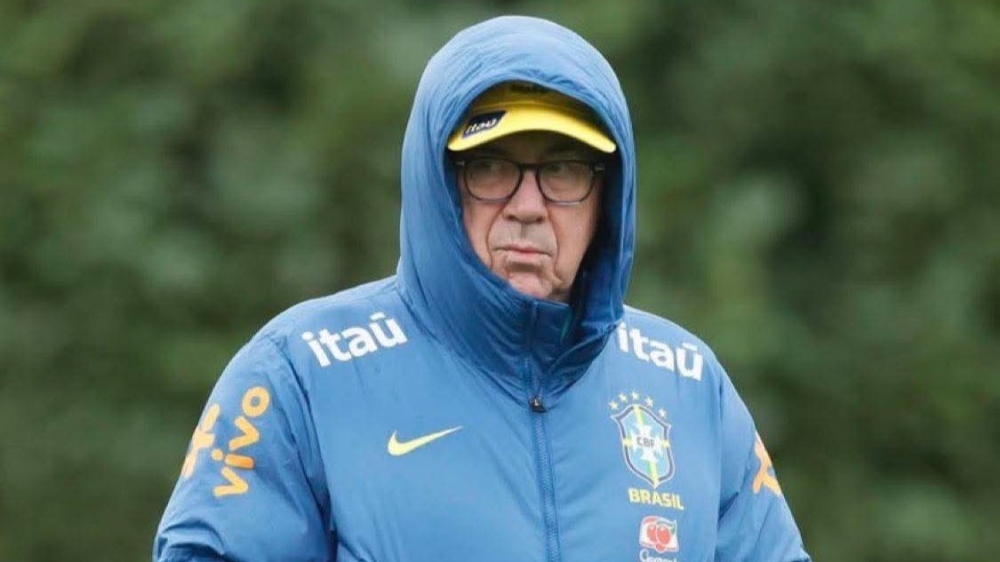
The eyes of the football world are on the future of the Brazilian national team, as the latest reports indicate that veteran Italian coach Carlo Ancelotti is very close to extending his contract to lead the "Seleção" in an ambitious project that extends until the 2030 World Cup finals. This development represents a significant strategic step for the Brazilian Football Confederation, which seeks to return the national team to the top of the world football pyramid after years of failures.
Background of the decision and its historical significance
Talk of renewing Ancelotti's contract comes at a time of transition for the Brazilian national team. Since winning their fifth World Cup title in 2002, the team has suffered a series of disappointments in the tournament, prompting the Brazilian Football Confederation to break with its long-standing tradition of relying almost exclusively on local coaches. Ancelotti, one of the most successful coaches in European football history, was chosen for his vast experience in managing star players and handling pressure – qualities the Brazilian team desperately needs. His continued leadership would provide much-needed stability and allow for the development of a cohesive team capable of competing at the long-term level.
Details of the ambitious new contract
According to Sky Sports, negotiations between Ancelotti and the Brazilian Football Confederation have reached an advanced stage for a new contract extending until June 30, 2030. This means the Italian coach will lead Brazil not only in the 2026 World Cup, which will be held in North America, but also in the 2030 tournament. Financially, the offer includes an annual salary of €10 million, plus a substantial bonus of up to €5 million if he leads the team to victory in the 2026 World Cup. The contract also takes into account the coach's personal needs, including a clause allowing him to travel to Canada to spend time with his family.
Expected impact on the international scene
Keeping a coach of Ancelotti's caliber at the helm of the Brazilian national team until 2030 not only impacts the team's domestic prospects but also sends a powerful message to rivals on both the regional and international stages. In South America, this stability will bolster Brazil's strength against their traditional rivals Argentina and other teams on the continent in Copa América tournaments and World Cup qualifiers. Internationally, having a long-term project led by a seasoned tactical coach reinforces Brazil's status as a perennial contender for major titles and restores the prestige the team has lost in recent years.
Ancelotti commented on the renewal issue with his usual calmness, saying: “We are not in a hurry, but if the idea is to continue, there is no problem. The truth is that the contract before the World Cup is less financially, and after it it may be much higher,” indicating that achieving success will open the door to greater gains for everyone.