Introduction: A global platform to address economic challenges
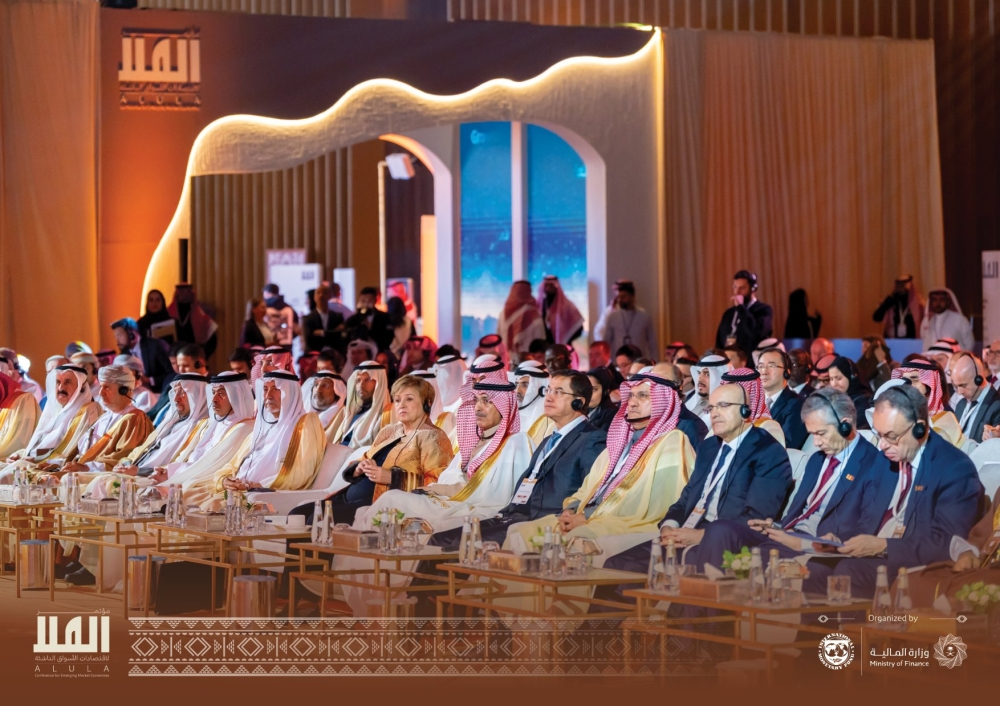
In a move reflecting the growing importance of the Kingdom of Saudi Arabia on the global economic stage, the historic city of Al-Ula hosted the second edition of the “Emerging Markets Economies Conference,” organized in strategic partnership between the Saudi Ministry of Finance and the International Monetary Fund. At the conclusion of the conference, held on February 8 and 9, 2024, a joint statement was issued by His Excellency the Minister of Finance, Mr. Mohammed Al-Jadaan, and Ms. Kristalina Georgieva, Managing Director of the International Monetary Fund, outlining a unified vision for the future of these dynamic economies.
Global context and importance of the conference
The conference is being held against a backdrop of a complex and uncertain global economic landscape, where emerging markets face multiple challenges, ranging from uneven recovery from the COVID-19 pandemic and geopolitical tensions to rapid shifts in global trade patterns and accelerating technological advancements such as artificial intelligence. In this context, the conference provides a vital platform for policymakers and experts from around the world to exchange experiences and coordinate efforts to build more resilient economies and achieve sustainable and inclusive growth.
The first message: The foundation of resilience lies in sound policies and good governance
The joint statement affirmed that the cornerstone of strengthening economic resilience in a world prone to shocks lies in adopting sound macroeconomic and fiscal policies. This includes maintaining price stability, consolidating public finances, and ensuring the stability of the financial sector. The statement noted that these policies must be underpinned by strong institutions and effective governance, as the experiences of many emerging markets have demonstrated that credible policy frameworks and robust institutional development directly contribute to better outcomes in terms of inflation, financial stability, and access to global markets, even under the most challenging circumstances.
The second message: Transitioning from stability to sustainable growth through structural reforms
With improved economic stability, the second message emphasized the need for emerging markets to move into a new phase of structural reforms aimed at achieving higher and more sustainable growth and creating new job opportunities. Unlocking the potential of the private sector is a key element in this process, through deepening financial markets, reducing barriers to entrepreneurship and investment, and harnessing modern technologies such as artificial intelligence. This requires strategic investments in digital infrastructure and equipping young people with the skills needed to thrive in the changing global labor market, which aligns with transformative visions such as Saudi Vision 2030.
Third message: Regional integration as a driving force for growth in a changing world
Amid the rapid shifts in global trade and investment patterns, the third key message highlighted that deepening integration within and between regions offers promising and significant opportunities. Enabling trade and strengthening regional cooperation not only contribute to building more resilient supply chains but also create broader markets for local businesses and attract more foreign investment. These two factors remain essential for emerging market economies as they adapt to the changing global economic landscape, enhancing their competitiveness and opening new avenues for growth.
Expected impact: To amplify the voice of emerging markets globally
The second edition of the conference underscores the importance of a dedicated global forum focused on the shared challenges, opportunities, and aspirations of emerging market economies. Both the Saudi Minister of Finance and the Managing Director of the International Monetary Fund expressed their appreciation for these economies' commitment to collaboration, knowledge sharing, and decisive action in addressing global challenges, and looked forward to continuing these constructive discussions in future editions of the conference.