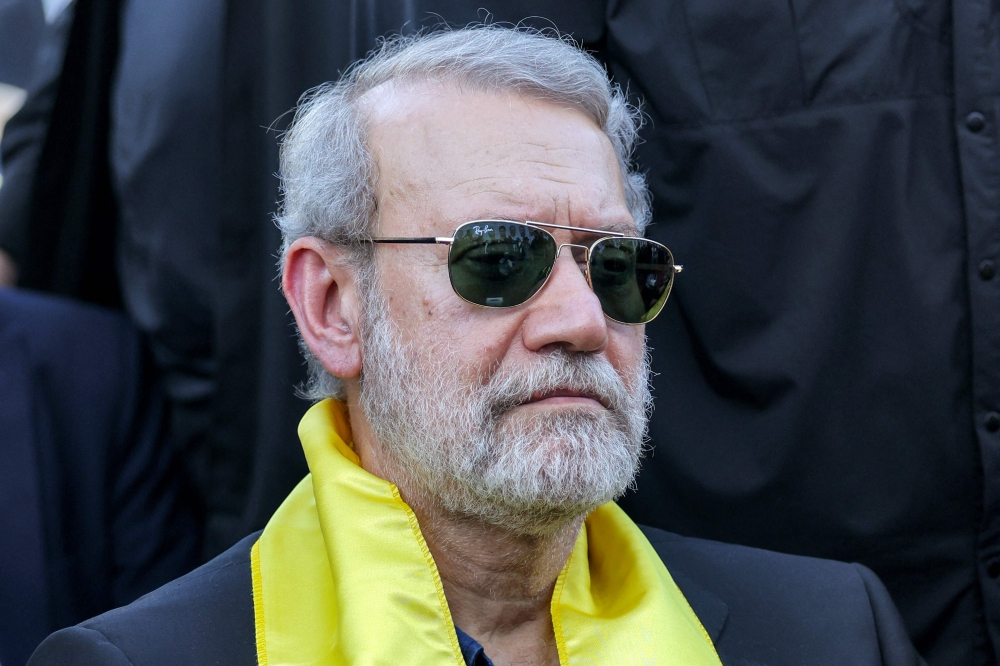
In a shocking security and military development that has reverberated throughout regional and international circles, Israeli occupation forces announced the execution of a precise security operation that resulted in the assassination of Ali Larijani , a prominent Iranian politician aged 67. This event represents a dangerous turning point in the ongoing conflict in the Middle East, especially since Larijani was not merely an ordinary government official, but rather a scion of one of the most influential families within the Iranian regime since the 1979 revolution.
Political Roots: Who is Ali Larijani?
Ali Larijani comes from a long-established religious and political family; he is the son of Ayatollah Mirza Hashem Amoli. His rise within the Iranian power structure was not accidental, but rather the result of a complex network of alliances and sensitive positions held by him and his brothers. His brother Sadegh Larijani served as head of the judiciary for a long period, while another brother, Mohammad Javad Larijani, distinguished himself as a political theorist and foreign policy activist.
Throughout his career, Ali Larijani held high-level positions that formed vital pillars of the Iranian state. He headed the Islamic Republic of Iran Broadcasting (IRIB) in the 1990s as the Supreme Leader's direct representative, granting him extensive control over domestic media discourse. Later, he served as Minister of Culture and Islamic Guidance, and then as Speaker of the Islamic Consultative Assembly (Parliament) for several consecutive terms, where he was known for his skill in managing the balance between conservative and reformist factions.
A pivotal role in the nuclear file and before the assassination of Ali Larijani
One of the most significant periods in Larijani's career was his tenure as Secretary of the Supreme National Security Council between 2005 and 2007. During this critical time, he led the arduous nuclear negotiations with Western powers. He was known for his pragmatic approach, which sought to spare Tehran harsh sanctions, but his internal disagreements with then-President Mahmoud Ahmadinejad led to his resignation.
Despite his distinguished career, Larijani faced repeated political setbacks in his bids for the presidency. In the 2005 elections, he garnered only 6% of the vote. His political crisis deepened when the Guardian Council disqualified him from running in the 2021 and 2024 presidential elections, a decision that sparked widespread controversy and exposed deep divisions within the traditional conservative camp to which he belonged. In August 2025, he returned to the forefront with his reappointment as Secretary of the Supreme National Security Council amidst unprecedented regional escalation, a position that would prove to be his final post before his assassination .
Regional and international repercussions of targeting a figure of Larijani's stature
This event cannot be viewed in isolation from the broader context of escalating tensions in the Middle East, particularly given the ongoing crises such as the Gaza war and numerous border clashes. The targeting of a figure of Larijani's stature, who possesses deep strategic expertise in managing security and nuclear issues, raises fundamental questions about the extent of penetration into the Iranian security apparatus and Tehran's ability to protect its senior officials.
Domestically, this incident is expected to reshuffle the cards within the Iranian regime, potentially pushing Tehran toward adopting more hardline policies to restore its image of deterrence before its domestic audience. Regionally and internationally, this dangerous escalation by the occupying power threatens to open new fronts and increases the likelihood of sliding into a full-blown confrontation that could transcend the boundaries of a proxy war and escalate into a direct conflict, threatening the stability of the entire region and presenting the international community with unprecedented diplomatic and security challenges.