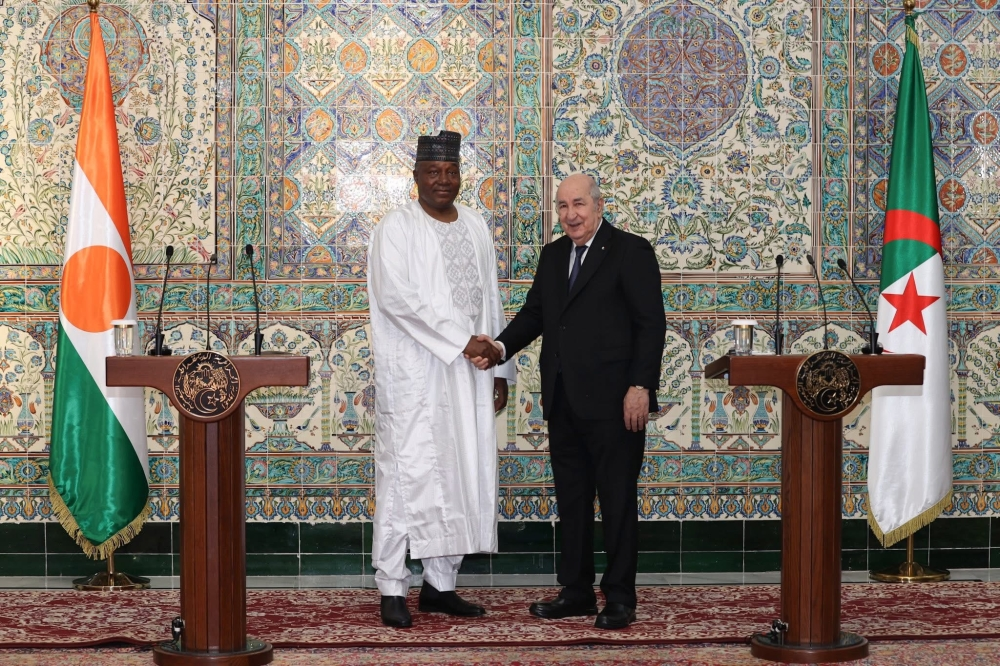
Algerian President Abdelmadjid Tebboune announced that his country and Niger have agreed to begin the actual implementation of the Trans-Saharan Gas Pipeline project, a strategic move aimed at strengthening the region's position as a major energy supplier to Europe. This announcement came during a joint press conference with the head of Niger's military council, Abdourahmane Tchiane, with Tebboune confirming that the practical procedures for the project will begin next March.
President Tebboune explained that Algeria is ready to provide all the necessary support and accompany Niger with its expertise and capabilities to ensure the success of this huge project, which represents the culmination of the memorandum of understanding signed in 2022 between Algeria, Niger and Nigeria.
Historical background of a giant project
The idea for the Trans-Saharan Gas Pipeline (TSGP), also known as Nigal, dates back to the 1980s, but it gained real momentum in the first decade of the new millennium. In 2009, the three countries (Nigeria, Niger, and Algeria) signed an intergovernmental agreement to launch it. However, the project faced significant challenges that led to its postponement, most notably security concerns in the Sahel and Sahara region, as well as difficulties related to the massive financing required.
However, recent global geopolitical tensions, specifically the war in Ukraine and the efforts of European countries to diversify their gas supply sources away from Russia, have revived this project and given it top priority, as it is now seen as a strategic and reliable solution to meet Europe’s growing energy demand.
Strategic importance for Africa and Europe
The project holds significant strategic importance at the local, regional, and international levels. Internationally, the pipeline will provide a direct and alternative route for transporting Nigerian gas to European markets, thereby contributing to enhanced energy security in Europe and reducing its dependence on specific suppliers.
Regionally, the project is a catalyst for economic integration between West and North African countries, as it will enhance cooperation between Nigeria, which has the largest proven gas reserves in Africa, Niger as a key transit country, and Algeria, which has a sophisticated infrastructure for exporting gas via pipelines and liquefied natural gas terminals.
Domestically, Nigeria will be able to exploit its vast gas reserves and generate substantial financial returns, while Niger will benefit from transit fees and the creation of new jobs, and Algeria will strengthen its role as a regional energy hub and a major gateway for African gas to Europe.
Project details and cost
The Trans-Saharan Gas Pipeline stretches for a total distance of 4,128 kilometers, originating in the gas fields of Nigeria, passing through Niger, and connecting to the Algerian grid, which in turn links directly to Europe. The project's investment cost is estimated at approximately $13 billion, with an annual transport capacity of up to 30 billion cubic meters of natural gas, making it one of the largest energy infrastructure projects in Africa.