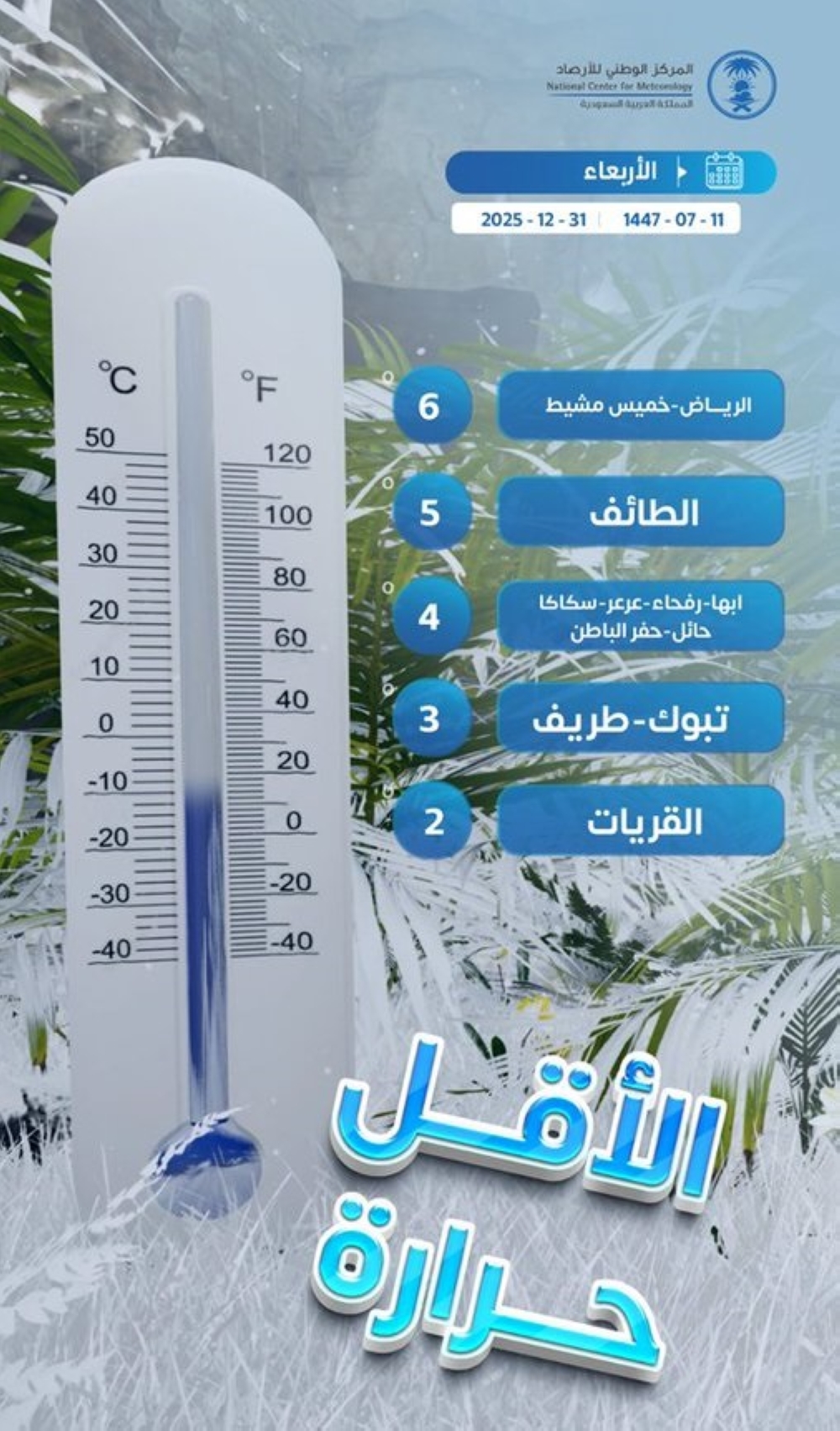
Al-Qurayyat Governorate topped the list of coldest areas in Saudi Arabia on Tuesday, recording the lowest temperatures across all cities and governorates of the Kingdom, according to official data issued by the National Center for Meteorology. Al-Qurayyat recorded a low of only 2 degrees Celsius, reflecting the cold wave currently affecting the northern and north-central regions of the country.
Temperature details in Saudi cities
The National Center of Meteorology's report indicated a significant variation in minimum temperatures, with the list as follows:
- Al Qurayyat: 2 degrees Celsius (the lowest in the Kingdom).
- Tabuk and Tarif: 3 degrees Celsius.
- Abha, Rafha, Arar, Sakaka, Hail, and Hafr Al-Batin: 4 degrees Celsius.
- Taif: 5 degrees Celsius.
- Riyadh and Khamis Mushait: 6 degrees Celsius.
The climatic and geographical context of the cold wave
These temperature drops are normal for this time of year, as the northern regions of the Kingdom (such as Al-Jawf, the Northern Borders, and Tabuk) are affected by cold air masses coming from the north. Al-Qurayyat, in particular, is characterized by its geographical location near the Jordanian border and its high altitude, making it susceptible to very low temperatures, which can drop below freezing during some harsh winters, leading to frost.
Historically, these regions are known for their harsh winters compared to the rest of the Kingdom, often experiencing snowfall in the Tabuk highlands or frost in the early morning hours in Qurayyat and Tarif. This climatic diversity highlights the Kingdom's varied geography, with weather differing drastically between the warm coastal areas, the northern regions, and the cold southern highlands.
Expected effects and the importance of warnings
This drop in temperatures has direct effects on daily life, requiring residents to take precautions such as wearing heavy winter clothing and exercising caution while driving early in the morning due to the possibility of fog or frost that could reduce visibility and compromise road safety. This weather also impacts the agricultural sector, forcing farmers in these areas to take measures to protect their crops from potential frost.
The National Center of Meteorology constantly emphasizes the need to follow weather bulletins and early warnings, especially since the drop in temperatures sometimes coincides with the activity of surface winds that stir up dust and sand, which may lead to near-zero visibility in open areas and highways, as indicated in the reports accompanying the current weather situation.