As the anniversary of Saudi Arabia's founding, which falls on February 22nd each year, approaches, the Kingdom's traditional markets witness a remarkable commercial and cultural surge. In the heart of Al-Ahsa, an oasis of palm trees and history, the ancient Al-Qaysariyah Market stands out as a prime destination for Saudi families seeking to celebrate this national occasion by wearing traditional attire that tells the story of three centuries of authenticity and pride.
Historical background: Founding day and its deep roots
Founding Day commemorates the establishment of the first Saudi state by Imam Muhammad bin Saud in 1727, with its capital in Diriyah. This occasion represents a source of pride in the deep-rooted history of the Saudi state, spanning nearly 300 years. Founding Day differs from National Day, celebrated on September 23rd, which commemorates the unification of the Kingdom of Saudi Arabia by its founder, King Abdulaziz bin Abdul Rahman Al Saud, in 1932. Celebrating Founding Day connects current generations to their rich history and strengthens their sense of belonging and loyalty to the nation.
Al-Qaysariyah Market: The pulse of heritage in the heart of Al-Ahsa
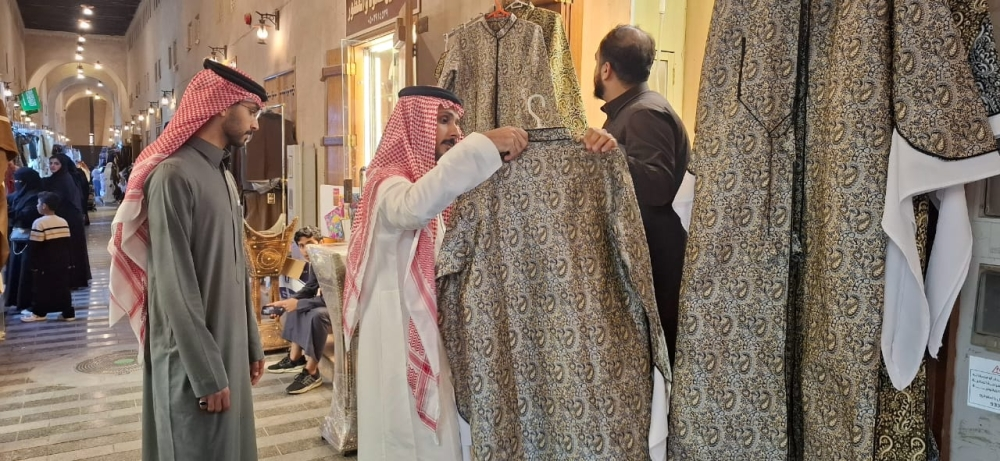
The centuries-old Al-Qaysariyah Market is one of the oldest and most beautiful traditional markets in the Gulf region. With its unique architectural design and covered walkways, the market was not merely a commercial center, but also a social and cultural hub for the people of Al-Ahsa. On its founding anniversary, the market reclaims its historical role as a repository of national identity, with its shops displaying a wide array of traditional clothing that embodies the authenticity of each region of the Kingdom, particularly the Eastern Province.
High demand for bishts and embroidered agals
A field survey of the market revealed an early and significant turnout of citizens and residents purchasing celebration necessities. "Bisht" (traditional men's cloaks) of various types, especially the renowned "Al-Ahsa bisht" known for its quality and meticulous craftsmanship, topped the sales charts. The "Agal al-Muqassab" (a type of headband), historically associated with the attire of kings and leaders, was also in high demand, as it symbolizes prestige and dignity. The demand wasn't limited to men's clothing; it also extended to embroidered "Daglat" (traditional robes) and "Sidiriyat" (vests) for children, reflecting families' keenness to instill pride in their heritage in their children.
In this context, visitor Abdullah Al-Hajri expressed his pride, saying, “Our children are an extension of our history, and celebrating this day instills in them a sense of belonging to the roots we all cherish.” He added, “We make sure to buy bishts for ourselves and our children, as this occasion is dear to our hearts, and we ask God to protect our country and grant it continued security and prosperity.”.
The importance of the event and its national impact
The impact of Founding Day extends beyond mere celebration, providing a significant economic boost to artisans and merchants specializing in traditional crafts. This increased demand revitalizes handicrafts and revives industries that were nearly extinct, such as the handmade production of bishts and agals. Culturally, celebrating traditional clothing strengthens awareness of local identity and encourages its documentation and transmission to future generations, contributing to the preservation of the Kingdom's rich cultural heritage as an integral part of Saudi Vision 2030, which places great emphasis on culture and heritage.
Mohammed Al-Amir, a specialist in bisht making, explained that he revived the historical "King Abdulaziz's style" to make it the iconic attire of the founding year, noting the increasing demand for "Marina" and "Wabar" fabrics crafted with the finest patterns. For his part, Saleh Al-Sultan, a maker of the agal (headband), affirmed that the traditional Saudi agal remains a symbol of authenticity and prestige, witnessing growing demand each year during the Founding Day celebrations, as an expression of pride in the rich Saudi heritage.