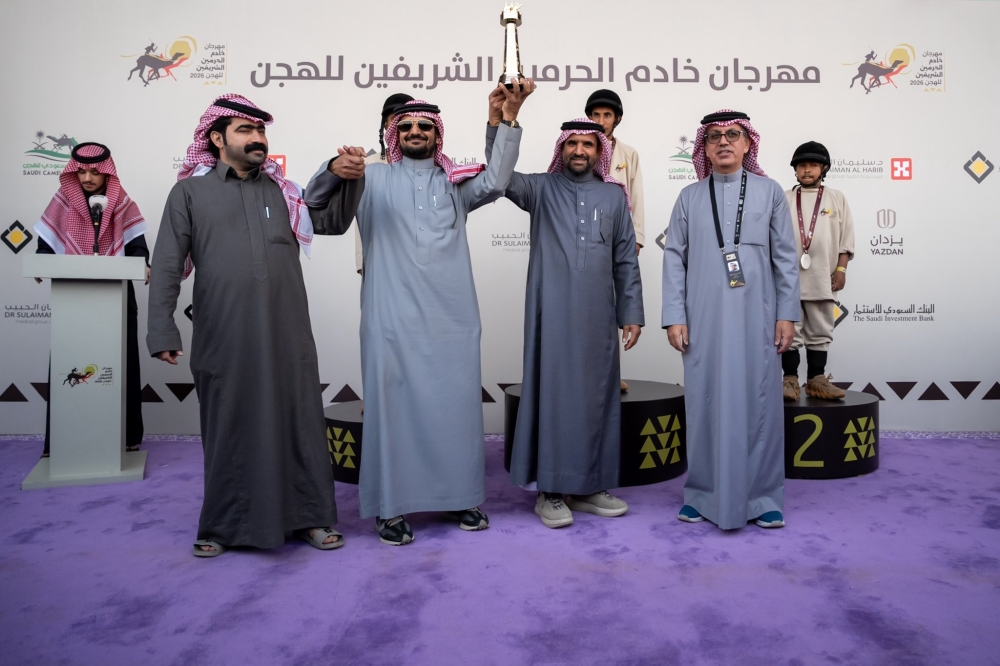
In a majestic heritage scene at the historic Janadriyah Camel Racing Track in Riyadh, the curtain fell on the camel racing competitions for human riders at the third edition of the Custodian of the Two Holy Mosques Camel Festival . Veteran Saudi camel rider Suleiman Muawad Al-Juhani Ziyad Awda Al-Arinbi etched his name in gold on the list of champions for the first time, confirming the emergence of a new generation of desert riders.
The historical context of camel racing and its cultural significance
Camel racing is an integral part of the cultural and historical fabric of the Arabian Peninsula. The lives of our ancestors were inextricably linked to camels, which served as their means of transportation, sustenance, and companions on their desert journeys. Over time, this relationship evolved into a deeply rooted heritage sport that embodies the values of strength, patience, and endurance. In Saudi Arabia, camel racing enjoys special royal patronage, having developed from traditional races into world-class festivals organized with professional standards and multi-million dollar prizes, becoming a national symbol that connects a rich past with a prosperous present and an ambitious future.
The importance of the festival and its role in achieving Vision 2030
The Custodian of the Two Holy Mosques Camel Festival stands as one of the most prominent events embodying the goals of the Kingdom's Vision 2030. It is not merely a sporting event, but a comprehensive economic, cultural, and tourism platform. The festival contributes to bolstering the local economy by stimulating the camel breeding and sales sector, creating job opportunities, and attracting both domestic and international tourism. Internationally, the festival solidifies the Kingdom's position as a leading global destination for camel racing and enhances its soft power by exporting this authentic cultural heritage to the world, as evidenced by the participation of camel owners from Gulf, Arab, and European countries, including Denmark.
Race results and field champions
The competitions culminated in the crowning of the champions in the presence of Mr. Hamad Al-Balawi, Vice Chairman of the Board of Directors of the Saudi Camel Racing Federation, and Ms. Ibtisam bint Abdulaziz Al-Wahibi, a member of the Board. The results were as follows:
- First round (male and female camels): Ziad Awda Al-Arinbi won the cup with the camel “Sharyan”, achieving a time of 8:50.618 minutes.
- The second round (Hil and Thanaya Bakar): Camel driver Suleiman Muawad Al-Juhani , with the camel “Roma”, won the title, recording a time of 8:37.968 minutes.
- Third round (male and female camels): The title went to the Saudi camel driver Salem Ali Al-Qahtani with the camel “Al-Joker” with a time of 8:39.056 minutes.
A remarkable female presence and an inspiring story
The men's competitions weren't the only exciting events; the women's races were equally thrilling. Emirati camel rider Fatima Al Ameri the fourth race, while Saudi camel rider Jawza Awad Al Rashidi victory in the fifth. In an inspiring story reflecting the empowerment of Saudi women, Saja Al Namla , a former equestrian who transitioned from horseback riding to camel racing, achieved second place in her first official competition. Saja explains that her passion for challenging sports led her to this world, which she found even more demanding than equestrianism. She expressed her appreciation for the significant support provided by the Saudi Camel Racing Federation, under the leadership of Prince Fahd bin Jalawi, in empowering Saudi female camel riders and enhancing their presence in international events.
It is worth mentioning that the festival, which was launched on January 23, offered prizes exceeding 75 million riyals, and witnessed wide international participation, to reaffirm the generous support that the wise leadership gives to this authentic heritage, and to transform it into a global sporting destination that attracts professionals from different continents.