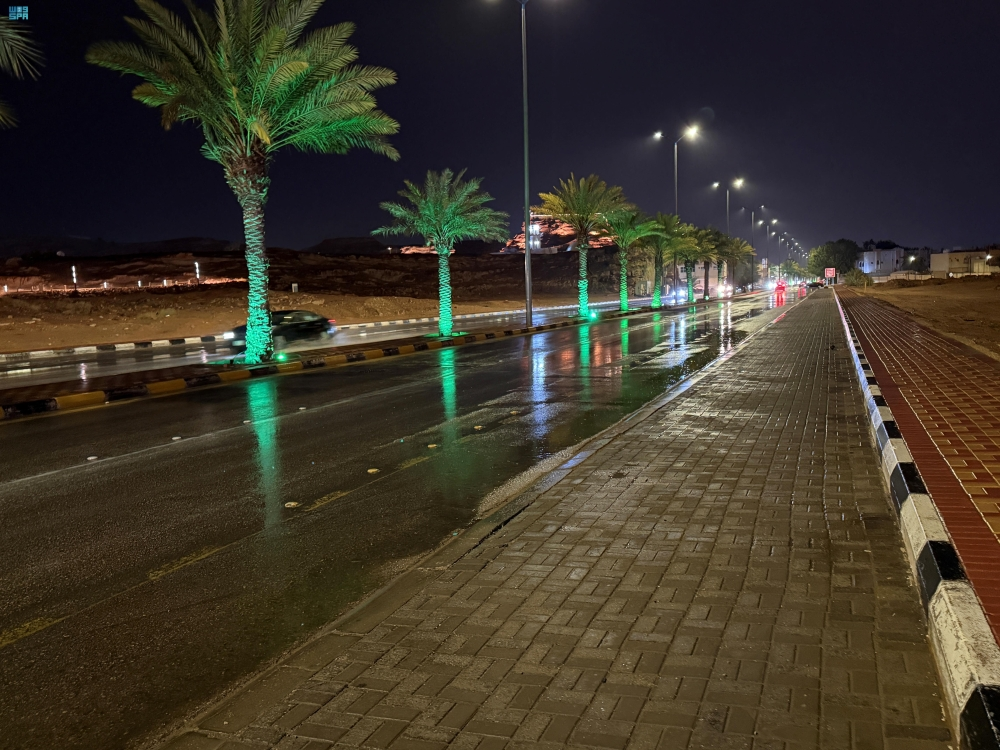
Northern Saudi Arabia experienced a refreshing weather pattern, with rain falling this morning in the Al-Jawf region, particularly in the city of Sakaka and its surrounding areas. The rainfall ranged from light to moderate, creating a wonderful winter atmosphere. This rainy weather was not limited to the capital city but also extended to the governorate of Dumat Al-Jandal and several of its affiliated towns and villages, much to the delight of residents and farmers who welcomed the bounty that nourishes the land and revitalizes nature.
Climatic and historical characteristics of the rainy season in the Al-Jawf region
The Al-Jawf region is strategically located in northern Saudi Arabia and experiences a desert and semi-desert climate characterized by cold winters and mild springs. Historically, rainfall in Al-Jawf at this time of year is considered part of the natural climatic cycle, eagerly awaited by the inhabitants. In past decades, the region has recorded varying rainfall patterns that have contributed to shaping its picturesque landscape and nourishing its ancient valleys, which stretch for considerable distances. These current rains are a continuation of the successive weather systems affecting the northern parts of the Kingdom, resulting from low-pressure systems originating in the Mediterranean basin. This climatic interplay makes these rainfalls a seasonal event with significant environmental and historical dimensions. In the collective memory of the people of Al-Jawf, the rainy season is associated with prosperity, growth, and the flourishing of natural pastures, which support the livestock sector.
Local and regional impacts on agriculture and groundwater
Rainfall in these regions is of paramount importance, extending far beyond simply moderating the climate and lowering temperatures. Locally, Al-Jawf is considered the "breadbasket of the Kingdom," home to millions of olive trees and vast areas dedicated to diverse agricultural projects such as date palm cultivation, fruit production, and wheat farming. This rainfall directly contributes to washing away dust from the leaves of trees, improving the quality of crops, and reducing the exorbitant irrigation costs for farmers. Regionally and nationally, the continued rainfall replenishes groundwater levels, upon which the region heavily relies to meet its water needs. This natural support for water resources bolsters environmental sustainability and water and food security in the Kingdom, aligning closely with the broader environmental objectives of the Saudi Green Initiative and Vision 2030 in combating desertification, increasing vegetation cover, and improving the quality of life for citizens.
Monitoring weather conditions and early warning systems
Amid these ongoing weather changes, relevant authorities, primarily the National Center of Meteorology and the General Directorate of Civil Defense, are continuing their tireless efforts to monitor weather developments around the clock. Early warning systems have been activated, classifying rainfall into three main categories, the most severe being "red," which indicates heavy rain and flash floods. This is to ensure the safety of citizens and residents and guide them in taking necessary precautions. According to recent reports and updates, there remains a strong possibility of continued rainfall in scattered parts of the region and neighboring governorates. Therefore, everyone is urged to exercise extreme caution, adhere to safety instructions such as staying away from valleys and water accumulations, and follow official weather forecasts.
Three levels, the most severe being "red"... Early warning stages for heavy rain #Today
For details | https://t.co/577gy75b31 pic.twitter.com/TvdGJwVlKf— Al-Youm Newspaper (@alyaum) March 14, 2026