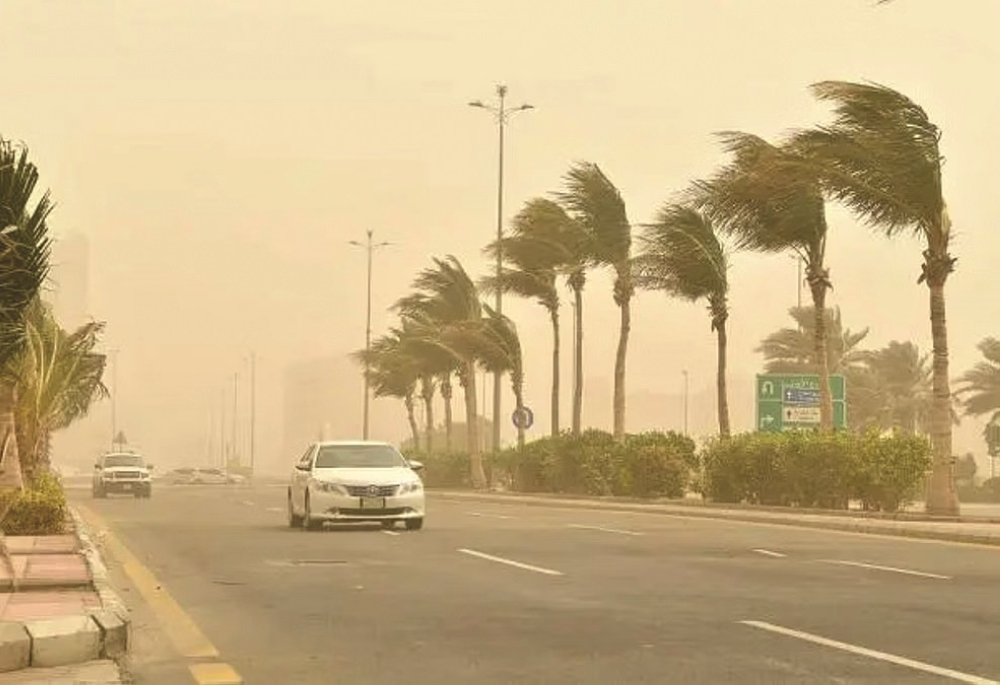
The National Center for Meteorology issued important warnings regarding weather developments in the Al-Jawf region in the coming hours, cautioning against continued strong winds and dust storms that will directly affect the city of Sakaka and three other major governorates in the region. These warnings come as part of the relevant authorities' commitment to the safety of citizens and residents, especially given the rapid weather changes occurring in the northern parts of Saudi Arabia.
The center's detailed report predicted that the city of Sakaka, along with the governorates of Dumat al-Jandal, Qurayyat, and Tabuk, would be affected by a dust storm accompanied by strong winds. This weather condition is expected to cause near-zero horizontal visibility, with visibility forecast to drop to between 3 and 5 kilometers. The center explained that this unstable weather pattern is expected to continue, God willing, until 1:00 AM on Sunday, necessitating caution from those using highways and open roads.
The geographical and climatic context affecting the weather of the Al-Jawf region
The weather changes in the Al-Jawf region are part of the natural climatic pattern of northern Saudi Arabia. Historically and geographically, Al-Jawf occupies a strategic location between the Mediterranean and arid desert climates, making it susceptible to sharp weather fluctuations, especially during the transitional periods between seasons. Surface winds become active during these times due to differences in atmospheric pressure, stirring up dust and sand from the open desert areas and carrying it towards cities and urban centers. This phenomenon is not new; rather, it is part of the climatic cycle to which the inhabitants of the northern regions are accustomed. However, its intensity varies from year to year depending on rainfall levels and vegetation cover.
The importance and expected effects of weather fluctuations
These weather changes have tangible effects on several local and regional levels. Locally, the dense dust directly impacts public health, with an increase in visits to hospitals and health centers by patients with respiratory illnesses and asthma. Traffic and land transport are also significantly affected, as the Al-Jawf region is a vital corridor connecting the Kingdom with the Levant, and the reduced horizontal visibility necessitates the activation of traffic emergency plans to prevent accidents.
On the other hand, the impact extends to the agricultural sector, for which the region is renowned, such as olive and date palm cultivation. Strong winds and dust storms can affect crops if they coincide with flowering or harvesting seasons, making it crucial for farmers to monitor weather forecasts to take the necessary precautions to protect their crops and ensure the sustainability of agricultural production, which is a vital economic pillar for the region.
Guidelines for safe handling of the current weather in the Al-Jawf region
Under these conditions, the General Directorate of Civil Defense and health authorities consistently emphasize the importance of following preventative guidelines for dealing with the volatile weather in the Al-Jawf region. It is advised to stay indoors as much as possible during sandstorms and to keep windows and doors tightly closed to prevent dust from entering. Wearing medical masks when going out is also stressed, as is the use of preventative medications for allergy sufferers. For drivers, maintaining a safe distance, using headlights, and avoiding excessive speed are crucial to ensure safe arrival and prevent any traffic accidents.