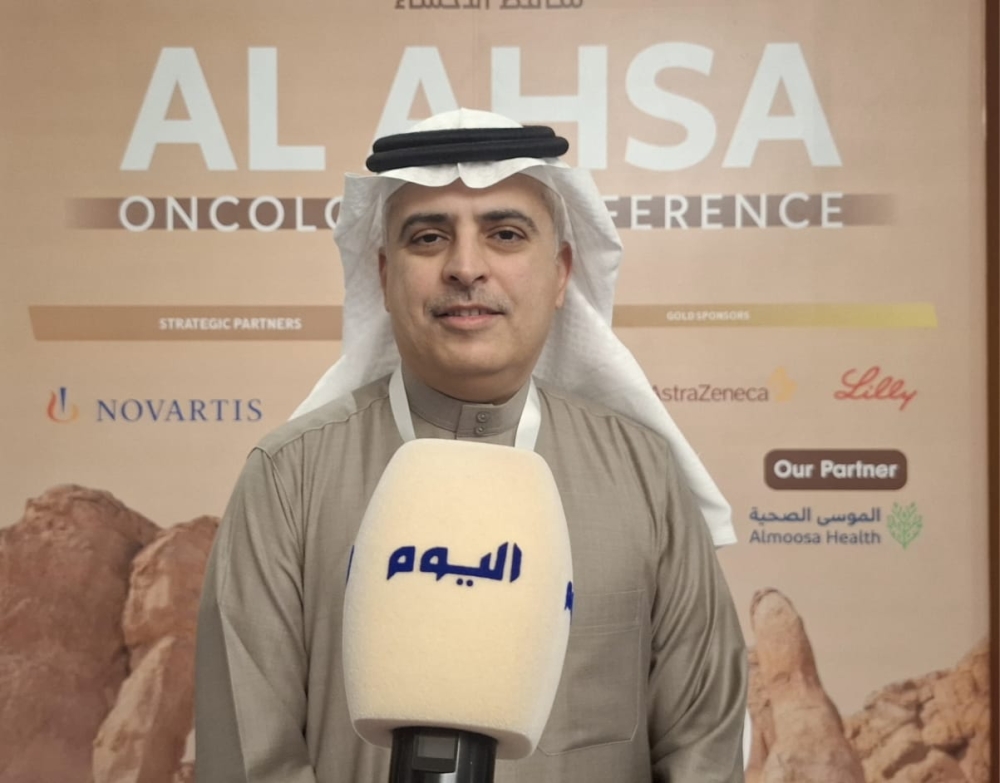
The Al-Ahsa Oncology Conference, organized by the Al-Ahsa Health Cluster under the patronage of His Royal Highness Prince Saud bin Talal bin Badr, Governor of Al-Ahsa, concluded with key scientific recommendations outlining the future of cancer treatment in the Kingdom. The most prominent of these recommendations was the call to adopt targeted therapies and personalized medicine as first-line treatments, based on the latest peer-reviewed studies that have demonstrated their high effectiveness in improving patient outcomes and enhancing their quality of life.
A qualitative shift from traditional treatment to precision medicine
The shift toward targeted therapies and personalized medicine represents a revolution in oncology. Unlike traditional treatments such as chemotherapy, which target all rapidly dividing cells in the body, including healthy ones, targeted therapies work with extreme precision. They are designed to target specific molecules or biological pathways that contribute to the growth and spread of cancer cells, thus minimizing side effects and increasing treatment effectiveness.
Personalized medicine goes a step further, relying on an understanding of the unique genetic and biological characteristics of each patient and their tumor. In this context, Dr. Abdulrahman Al-Abd Al-Aali, head of the conference's organizing committee, explained that this approach "places the patient at the heart of the treatment decision, not as a general case, but with their unique biological characteristics," allowing for the design of customized treatment plans that ensure the highest chances of response and recovery.
The importance of a strategy that aligns with the Kingdom's Vision 2030
The importance of these recommendations extends beyond the medical field, encompassing strategic dimensions that align with the goals of the Kingdom's Vision 2030 in the healthcare sector. Locally, adopting these advanced treatment technologies contributes to raising the standard of healthcare services provided to citizens, improving overall health indicators, and reducing the long-term economic burden of cancer treatment. It also enhances the standing of specialized centers in the Kingdom, such as the Hamad Al-Jabr Oncology Center in Al-Ahsa, as beacons of excellence in healthcare.
Regionally, this approach places the Kingdom among the leading countries in the field of cancer treatment, and makes the Al-Ahsa Conference a vital platform for exchanging experiences and knowledge among specialists in the region, thus driving development in this field at the level of the Middle East.
Leadership support and integrated efforts for the success of the conference
The conference, inaugurated by the Deputy Governor of Al-Ahsa, Mr. Muath Al-Jaafari, witnessed a remarkable turnout of experts and specialists from both within and outside the Kingdom. In his opening remarks, Mr. Al-Jaafari emphasized the Governor's keen interest in the health of citizens and his unwavering support for initiatives that promote prevention, early diagnosis, and the improvement of healthcare services.
For his part, Dr. Khalid Al-Mulla, CEO of the Al-Ahsa Health Cluster, noted that the conference embodied the integration of all medical and health sectors in the governorate. He explained that the scientific program extended for more than 16 accredited educational hours and discussed over 45 scientific topics presented by a select group of speakers, covering the entire journey of a cancer patient, from prevention and early detection, through various types of treatments, to rehabilitation and psychological support.
The conference concluded by honoring the organizing and scientific committees and sponsors, after which the intensive scientific sessions began, which lasted for two days, with the aim of discussing the latest clinical developments and highlighting evidence-based practices to ensure the best possible care for cancer patients.