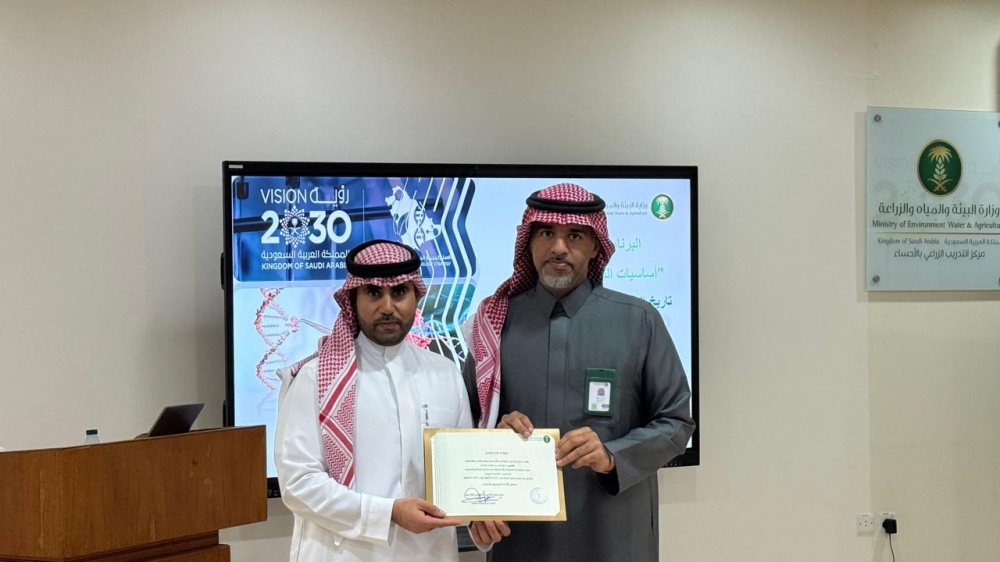
In a strategic move aimed at enhancing national capabilities and localizing advanced knowledge, the Agricultural Training Center in Al-Ahsa Governorate, affiliated with the Ministry of Environment, Water and Agriculture, concluded its specialized training course entitled “Fundamentals of Biotechnology.” The three-day course targeted ministry employees from various related sectors, aiming to equip them with essential knowledge and skills in molecular biology and DNA applications, in line with the objectives of the Kingdom’s Vision 2030 and the National Biotechnology Strategy.
Strategic background: Biotechnology and Vision 2030
This training initiative comes within the context of a comprehensive national transformation led by the Kingdom’s Vision 2030, which prioritizes economic diversification and the strengthening of non-oil sectors. The agricultural sector is a cornerstone for achieving food security and environmental sustainability. In this context, biotechnology represents a pivotal tool for revolutionizing agricultural practices by developing more drought- and salinity-resistant plant varieties, improving livestock production, and developing precise methods for pest and disease control. Al-Ahsa, the world’s largest palm oasis, is known for its rich agricultural history, making it an ideal platform for embracing and implementing these modern technologies to ensure the sustainability of its natural resources.
Course objectives and scientific content
The center's director, Engineer Ahmed Al-Nashi, explained that the course aimed to enhance the professional and intellectual competence of the participants and equip them with the latest scientific concepts and practical applications in this rapidly evolving and vital field. Dr. Yousef Al-Hammad, a specialist in biotechnology, presented intensive scientific content covering the principles of molecular biology, techniques for extracting and analyzing DNA, and their direct applications in agricultural and veterinary settings. The program highlighted the role of the National Biotechnology Strategy as a roadmap for stimulating innovation and supporting scientific research, thereby strengthening the Kingdom's position as a leading regional hub for life sciences.
Expected impact and importance of capacity building
Developing national talent in specialized fields such as biotechnology has multiple positive impacts. Locally, empowering specialists to apply these technologies will contribute to increased agricultural production efficiency, reduced reliance on water resources, and enhanced food security for the Kingdom. Regionally and internationally, these efforts reinforce the Kingdom's leadership in adopting innovative solutions to address shared global challenges such as climate change and water scarcity. Dr. Al-Hammad emphasized that building a qualified human capital is the cornerstone of leading the transition to a sustainable knowledge-based economy, capable of keeping pace with and effectively contributing to global technological advancements. The course received a very positive response from participants, who praised the program's rich content and stressed the importance of continuing such training programs to develop their national expertise.