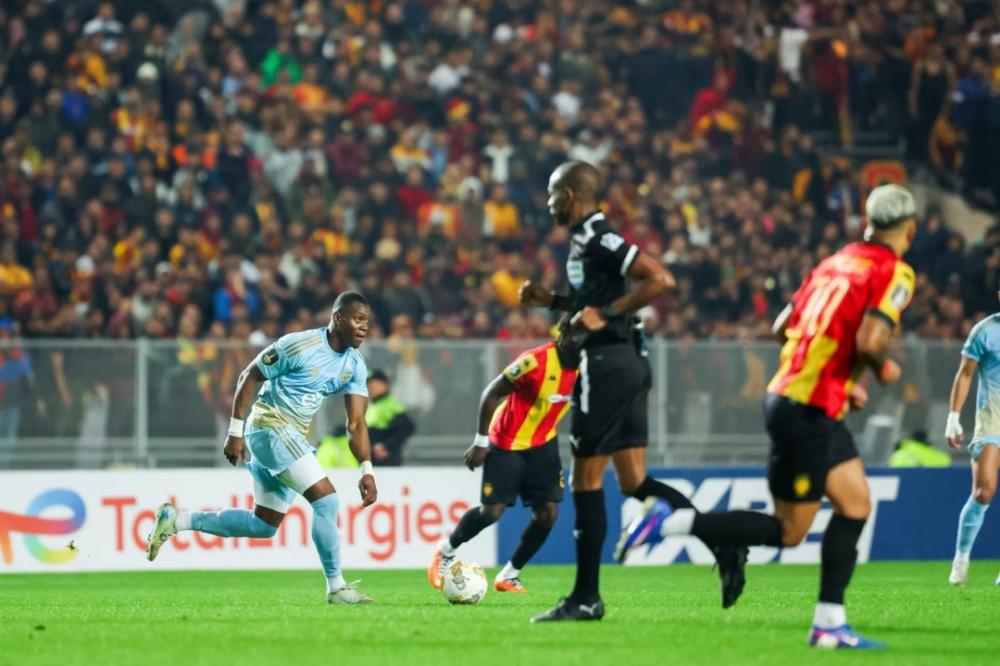
Al Ahly SC of Egypt issued an official statement announcing that they have filed a complaint with the Confederation of African Football (CAF) against Senegalese referee Issa Sy, following the refereeing errors that occurred during their first-leg match against Tunisian side Espérance Sportive de Tunis in the CAF Champions League knockout stages. This step comes as part of the club's efforts to protect its rights and ensure fairness in crucial matches.
Details of Al Ahly's complaint to the African Football Confederation against the Senegalese referee
Al Ahly's complaint included detailed observations on the errors committed by Senegalese referee Issa Sy, which the club believes nearly influenced the outcome of the match. The statement explained that the referee failed to adequately protect Al Ahly players from the opposing team's violent tackles and neglected to issue cards when necessary.
Furthermore, Al Ahly's complaint highlighted the failure to award a clear penalty to one of their strikers after he was blatantly pulled down by an Esperance defender inside the penalty area, a foul overlooked by the Video Assistant Referee (VAR). Conversely, the referee awarded an incorrect penalty to the opposing team, despite television replays clearly showing the ball struck the Al Ahly player's shoulder, not his hand. The club also criticized the excessive delay by the VAR official in calling the on-field referee to review the controversial plays.
The historical context of arbitration crises in Africa
This crisis is not a recent development, but rather an extension of a series of refereeing controversies that have long plagued major African tournaments. Historically, many clubs, most notably Al Ahly, the most successful club in the history of the CAF Champions League, have suffered from questionable refereeing decisions. Despite the introduction of Video Assistant Referee (VAR) technology in recent years, aimed at reducing human error and ensuring a level playing field, its practical application in some African stadiums continues to face sharp criticism due to a lack of coordination or delays in decision-making.
Al-Ahly based its complaint on previous incidents involving referee Issa Sy, pointing out that he had made significant mistakes in previous matches, including Al-Ahly’s match against a Burundian club in the second leg of the round of 32 in Cairo, where he expelled one of the attacking players without him committing any offense that warranted such a harsh punishment, which confirms the existence of a pattern of adverse decisions that harm the team’s interests.
The expected impact of the complaint on the sports scene
This complaint is expected to have a wide-ranging impact on several levels. Locally, it reflects Al Ahly's board of directors' desire to reassure its fans that it will not hesitate to defend the team's rights in any arena. Regionally and continentally, this complaint puts significant pressure on the Confederation of African Football's (CAF) Referees Committee to review its referee selection criteria, particularly for knockout stages where errors of this magnitude are unacceptable.
Al-Ahly concluded its statement by demanding that the necessary legal measures be taken regarding these incidents, stressing the importance of assigning knockout and decisive matches to elite referees in the continent, in order to protect the integrity of African competitions and ensure that they are conducted in a manner befitting the reputation of African football at the international level.