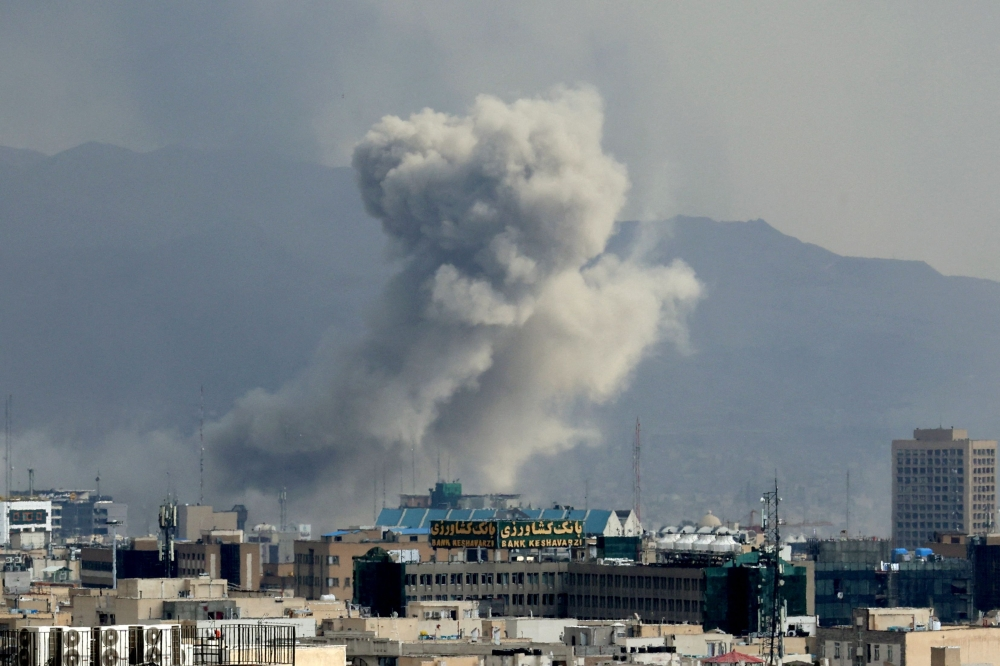
Iranian state media reported on Monday that airstrikes targeted Tehran , striking the emergency services headquarters in the heart of the capital, amid a wave of military escalation in the region. The Iranian Students' News Agency (ISNA) confirmed that this attack came on the third day of what it described as an "Israeli-American attack," indicating a widening scope of targeting to include civilian and service infrastructure.
The agency quoted the spokesman for the Emergency Services Organization, Sherwin Tabrizi, confirming that the main building of the regional emergency services organization, located on the bustling Iranshahr Street in central Tehran, had been directly targeted. Tabrizi stated that the attack resulted in minor injuries to several of his colleagues at the organization. International news agencies such as Agence France-Presse were unable to independently verify all the details immediately following the incident.
Context of military escalation and background of the conflict
This incident cannot be separated from the broader context of escalating tensions in the Middle East, where confrontations have shifted from proxy wars and cyberattacks to direct and declared military operations. The fact that the bombing reached deep into the Iranian capital and targeted vital infrastructure in areas like Iranshahr indicates a qualitative shift in the rules of engagement. Operations are no longer limited to border military targets or remote nuclear facilities, but now extend to the administrative and service centers of the state.
The repercussions of airstrikes targeting Tehran on regional stability
Launching airstrikes targeting Tehran serious geopolitical implications that extend far beyond direct material losses. Targeting emergency services facilities, which are civilian institutions protected under international norms during times of conflict, could open the door to a new wave of international criticism and human rights concerns. Domestically, this attack presents Iranian authorities with significant challenges in protecting the home front and ensuring the continuity of essential services in the face of external threats.
Internationally, major capitals and global markets are watching for potential reactions, as such attacks in major capitals often lead to heightened political rhetoric and mutual threats, directly affecting energy prices and the stability of navigation in the region, and further complicating diplomatic efforts to de-escalate tensions.