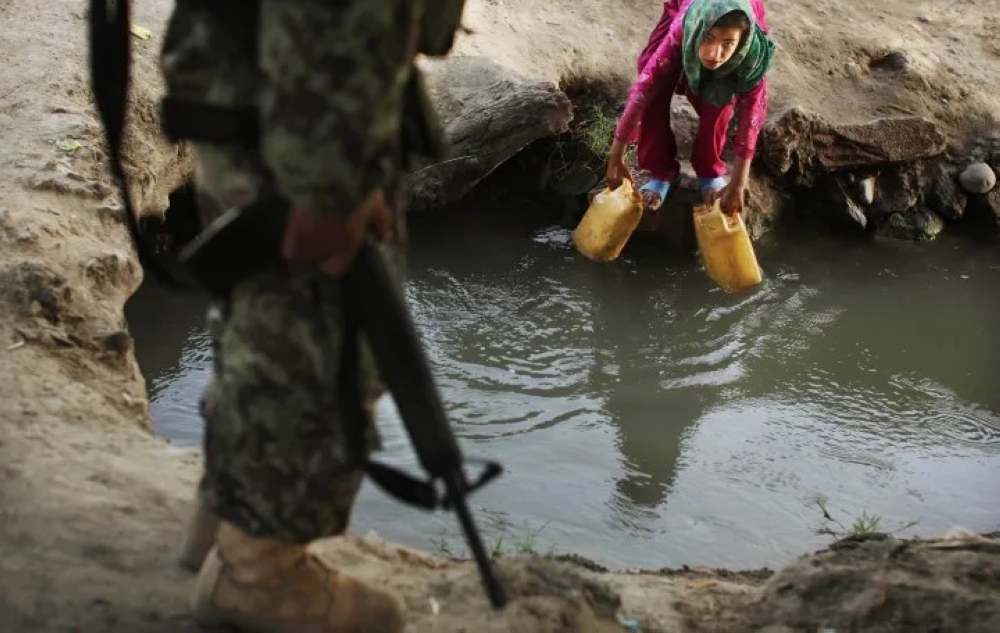
The European Union has issued a stark warning about the worsening humanitarian crisis in Afghanistan, revealing that more than 21 million people – nearly half the country's population – lack access to safe and clean drinking water. This shocking figure underscores the scale of the disaster, which demands urgent international intervention and emergency aid, including drilling wells and installing water pumps to provide the most basic necessities for the population.
Background to the crisis: Decades of conflict and climate change
Afghanistan’s water crisis is not a recent development, but rather the cumulative result of decades of conflict and war that have devastated the country’s basic infrastructure, including water and sanitation networks. With the Taliban’s takeover in August 2021, the situation worsened dramatically due to economic collapse and the freezing of international assets, crippling the authorities’ ability to maintain existing facilities or build new ones.
In addition to the political factor, climate change plays a pivotal role in exacerbating the crisis. Afghanistan is considered one of the countries most vulnerable to the effects of climate change, suffering from severe and recurring droughts that have depleted rivers and groundwater. In turn, flash floods contaminate the remaining water sources, rendering them unusable for human consumption.
devastating health and social impacts
The lack of clean water has dire consequences for public health. The United Nations Children's Fund (UNICEF) confirms that approximately 80% of Afghans rely on contaminated water sources for drinking, significantly increasing the risk of outbreaks of waterborne diseases such as cholera, acute diarrhea, and typhoid fever. Children and the elderly are at the greatest risk, as these diseases weaken their immune systems and increase mortality rates.
Health experts warn that Afghanistan’s fragile health system cannot withstand the burden of a large-scale epidemic. On a social level, water scarcity places a heavy burden on women and girls, who often have to travel long distances to fetch water, exposing them to security risks and depriving them of educational and employment opportunities.
International efforts to confront the disaster
Faced with this critical situation, the European Union and its humanitarian partners are working on the ground to alleviate the crisis. Their efforts include implementing emergency projects to install solar-powered water pumps and drill new wells, with a particular focus on rural and remote, hard-to-reach areas. However, these efforts remain insufficient given the enormous scale of the needs and require sustained, coordinated international support to avert a deeper humanitarian catastrophe in Afghanistan.