On Saturday, the Taliban government authorities in Afghanistan announced the start of joint security cooperation with their northern neighbor, Tajikistan, with the aim of conducting extensive investigations into the circumstances of a bloody border clash that occurred last Thursday, which resulted in deaths on both sides, in a rare step of cooperation between the two countries, whose relations have been markedly strained since 2021.
Details of the security incident
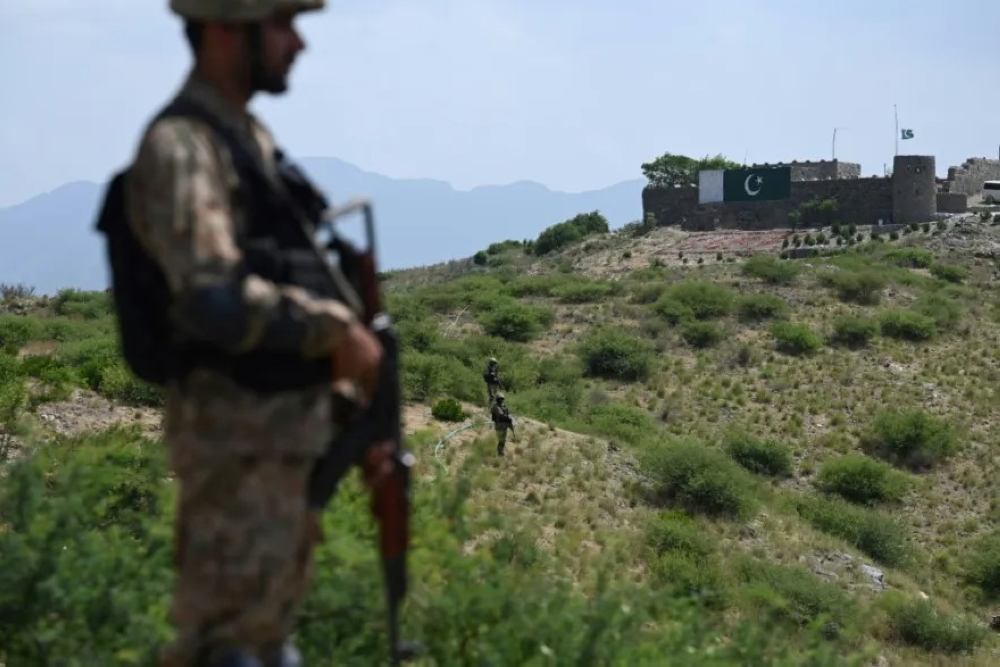
According to official reports, the incident resulted in the deaths of five people, including two Tajik border guards. The Tajik National Security Committee, in a statement published by the official news agency Khobar, explained that the clash erupted when a group of three members of a "terrorist organization" attempted to illegally cross the border in Khatlon province, which borders Afghanistan.
The statement confirmed that Tajik border guard forces confronted the infiltrators, resulting in their "neutralization" and the killing of all of them, but the operation also resulted in the death of two Tajik border guards during the exchange of fire.
Diplomatic move to contain the situation
In an official statement from Kabul, Afghanistan's acting foreign minister, Amir Khan Muttaqi, said his government had launched a "serious investigation" into the recent incidents on Tajik territory. "I have held talks with the Tajik foreign minister, and we are working together to prevent such incidents from happening again," Muttaqi said during an event in the capital.
Mottaki hinted at the existence of external parties seeking to fuel the conflict, saying: "We are concerned that some malicious parties are seeking to destroy relations between the two neighboring countries," without providing further details about the identity of these parties.
Background of tension and complex relationships
This incident is particularly significant given the strained relations between Kabul and Dushanbe. The two countries share a rugged, mountainous border stretching approximately 1,350 kilometers, which has long posed a major security challenge and served as a corridor for smuggling operations and the infiltration of armed groups.
Since the Taliban's return to power in August 2021, Tajikistan has adopted a stance distinct from the rest of Central Asia. Tajik President Emomali Rahmon, who has ruled the country since 1992, is the only leader in the region to publicly and sharply criticize the Taliban, demanding the formation of an inclusive government that respects the rights of Afghanistan's Tajik minority, estimated at around ten million people, or about a quarter of the country's population.
Regional and security concerns
This incident is not isolated from the broader security context in the region. Recent months have witnessed sporadic border skirmishes, rarely officially acknowledged, despite bilateral meetings aimed at containing the situation. Central Asian states, and by extension Russia and China, fear that Afghan territory could become a launching pad for extremist groups that could threaten the region's stability.
In a related context of cross-border security risks, Tajik authorities reported that at least five Chinese citizens were killed and others injured in two separate attacks that occurred in late November and early December along the border region, further complicating the security situation and putting additional pressure on the Taliban to control their northern borders.