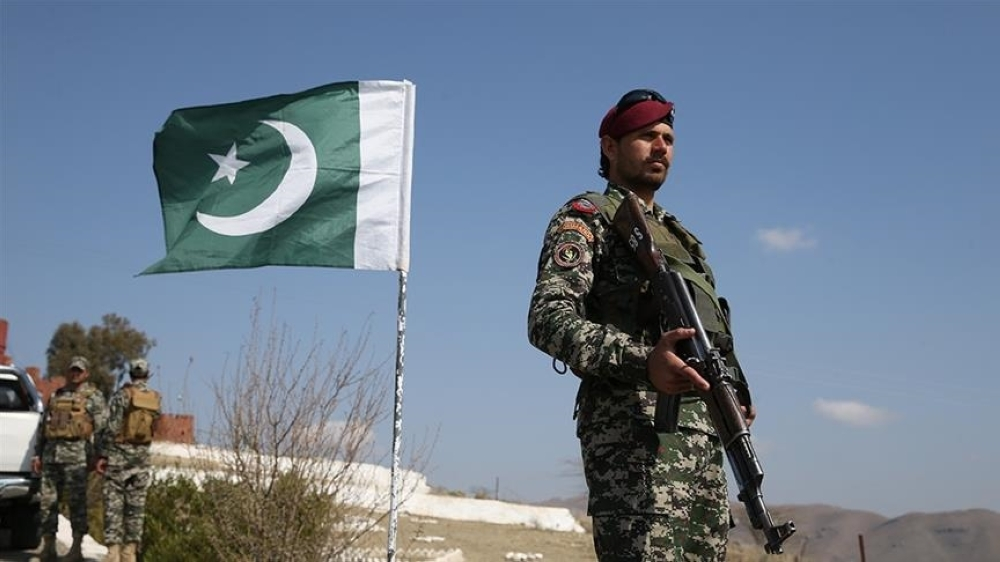
The Taliban in Afghanistan announced the start of “intense attacks” with heavy weapons on Pakistani military positions along the shared border, a dangerous escalation in direct response to airstrikes launched by Islamabad inside Afghan territory days earlier that killed civilians. Wahidullah Mohammadi, a spokesman for the army in eastern Afghanistan, confirmed that border forces had begun their operations in response to “Pakistani aggression,” opening a new chapter of tension between the two neighboring countries.
A background of historical tensions and volatile borders
The roots of the current tension lie in decades of complex and intertwined relations, largely centered on the Durand Line, a border drawn by British colonialism in the 19th century and not officially recognized by Afghanistan. This border has long been a source of conflict and mutual accusations. While previous Afghan governments accused Pakistan of supporting the Taliban during the US-led war, Islamabad now faces a reverse security challenge. Pakistan accuses the current Taliban government in Kabul of providing safe havens for fighters of the Pakistani Taliban (TTP), an armed group that carries out deadly attacks inside Pakistan and aims to overthrow the government there.
The spark of the latest escalation
The latest crisis erupted after a suicide attack targeted a military checkpoint in North Waziristan, Pakistan, killing seven soldiers. Islamabad blamed militants based in Afghanistan and retaliated with rare and intense airstrikes on the Afghan provinces of Khost and Paktika, killing at least eight people, mostly women and children, according to Taliban authorities. These strikes drew strong condemnation from Kabul, which considered them a violation of its sovereignty and vowed to retaliate, a vow that has now translated into ground attacks on Pakistani border posts.
Importance and potential impacts on the region
This military escalation has serious repercussions that extend far beyond the borders of the two countries. Locally , populations on both sides of the border are suffering from insecurity and the disruption of trade, on which they depend for their livelihoods. Regionally , open conflict threatens to further destabilize an already volatile region and could impact regional economic projects such as the China-Pakistan Economic Corridor (CPEC). Internationally , this tension raises concerns among global powers about the region reverting to a hotbed of terrorism and conflict, especially given the Taliban government's failure to control armed groups operating from its territory and Pakistan's inability to contain the growing security threats. The continuation of this situation could lead to a wider, more difficult-to-contain conflict, necessitating urgent diplomatic efforts to de-escalate the situation.