Continuous efforts to serve the Two Holy Mosques
The General Authority for the Care of the Two Holy Mosques continues to utilize the latest global technologies and best engineering practices to ensure a comfortable and safe worship environment for millions of visitors annually. These efforts are a continuation of a long history of care for the Two Holy Mosques, which has witnessed unprecedented expansions in the modern Saudi era, aimed at accommodating the increasing numbers of pilgrims, Umrah performers, and visitors, and providing them with the highest quality services in fulfillment of the aspirations of the wise leadership.
Giant cooling systems with global standards
The cooling system at the Grand Mosque in Mecca is one of the largest in the world, operating at a total capacity of 155,000 tons of cooling. This capacity is supplied through two main stations: the Al-Shamiyah and Ajyad stations. The system works by cooling water to a temperature between 4 and 5 degrees Celsius, then pumping it through an insulated pipe network to air handling units within the Grand Mosque. This system ensures a moderate and comfortable temperature of between 22 and 24 degrees Celsius, precisely controlled by 77 strategically placed temperature sensors. These sensors respond instantly to changes in human density and heat loads, especially during peak seasons such as Ramadan and Hajj. The system also incorporates advanced air purification systems with an efficiency of up to 95% to guarantee a healthy and clean environment.
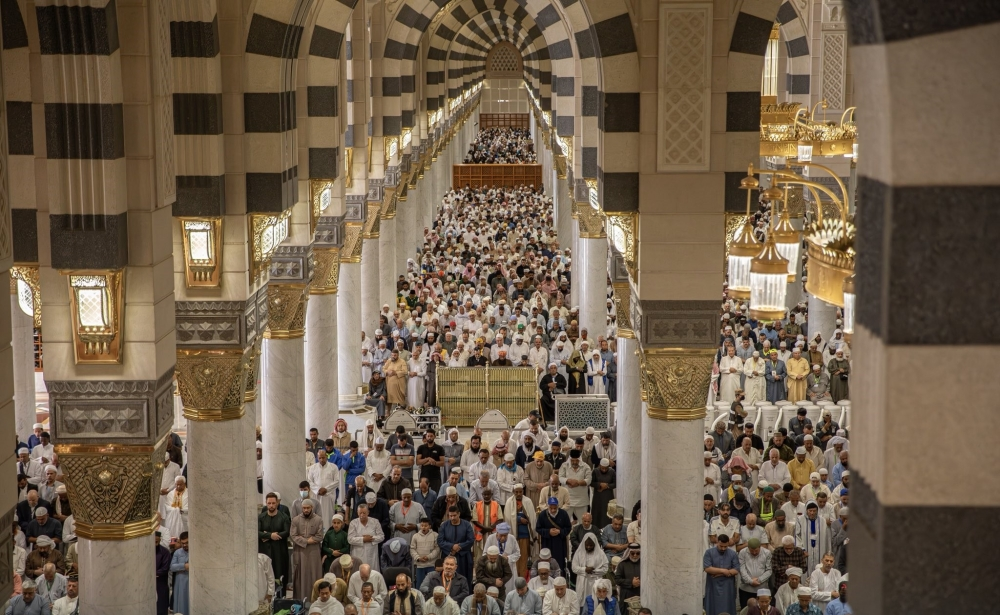
At the Prophet's Mosque, the Authority operates a central cooling plant, one of the largest in the world, located 7 kilometers from the mosque. The plant operates with high efficiency through six central cooling units, pumping chilled water to 151 air handling units distributed throughout the mosque, providing a comfortable and suitable environment for worshippers and visitors around the clock.
Facilitating movement and crowd management
To facilitate the movement of pilgrims between the levels and facilities of the Two Holy Mosques, they have been equipped with a comprehensive network of escalators and elevators. The Grand Mosque (Masjid al-Haram) has more than 220 escalators and 29 elevators strategically located, capable of serving over 200,000 people per hour, thus contributing to smooth traffic flow and supporting highly efficient crowd management. The Prophet's Mosque (Masjid an-Nabawi) also provides 180 escalators and 25 elevators, all of which undergo continuous preventative maintenance programs to ensure the highest standards of safety and quality.
Smart and sustainable lighting
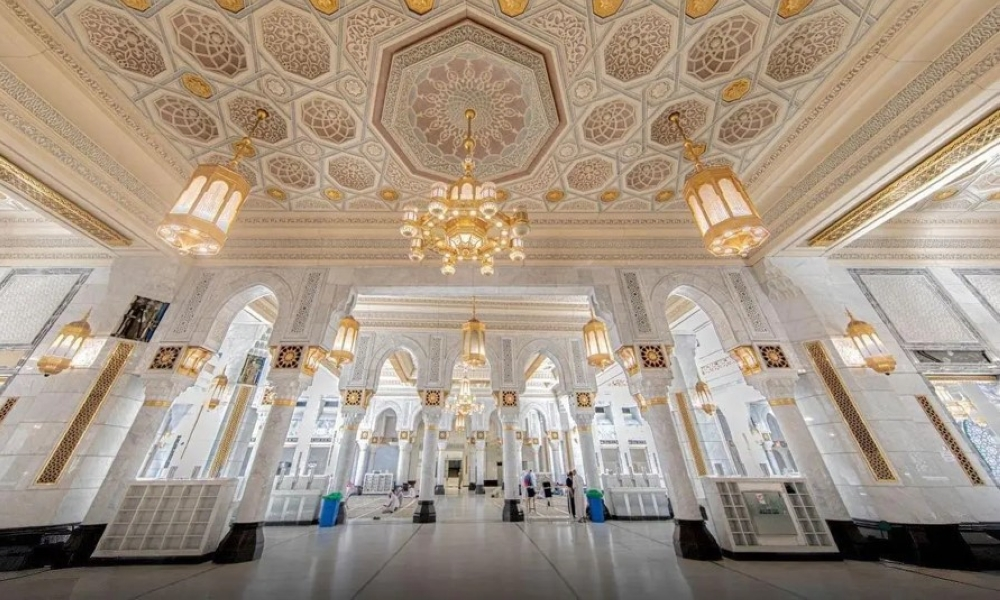
The lighting systems in the Two Holy Mosques have undergone a significant transformation with the complete conversion to modern, highly efficient, and energy-saving LED units. The Grand Mosque (Masjid al-Haram) boasts over 120,000 lighting units and 6,900 chandeliers, while the Prophet's Mosque (Masjid an-Nabawi) features more than 137,000 color-coded LED units. This system is managed through a smart building management system (BMS), which connects the lighting to control systems to adjust its intensity according to prayer times and crowd density. This achieves an ideal balance between architectural aesthetics, energy efficiency, and pedestrian safety, while also providing optimal visibility in the circumambulation area (Mataf) and the area between Safa and Marwa (Mas'a).
Importance and impact within Vision 2030
The importance of these technological projects extends beyond mere operational aspects; they represent a fundamental component of Saudi Vision 2030, which aims to enrich the religious experience of pilgrims performing Hajj and Umrah. The deployment of these advanced technologies reinforces the Kingdom's position as a leader in the Islamic world and highlights its capacity to efficiently and effectively manage the world's largest gatherings. These systems also set a global standard for managing large-scale facilities and contribute to environmental sustainability by optimizing energy and water consumption, ultimately providing a comprehensive and safe spiritual experience for pilgrims from around the world.