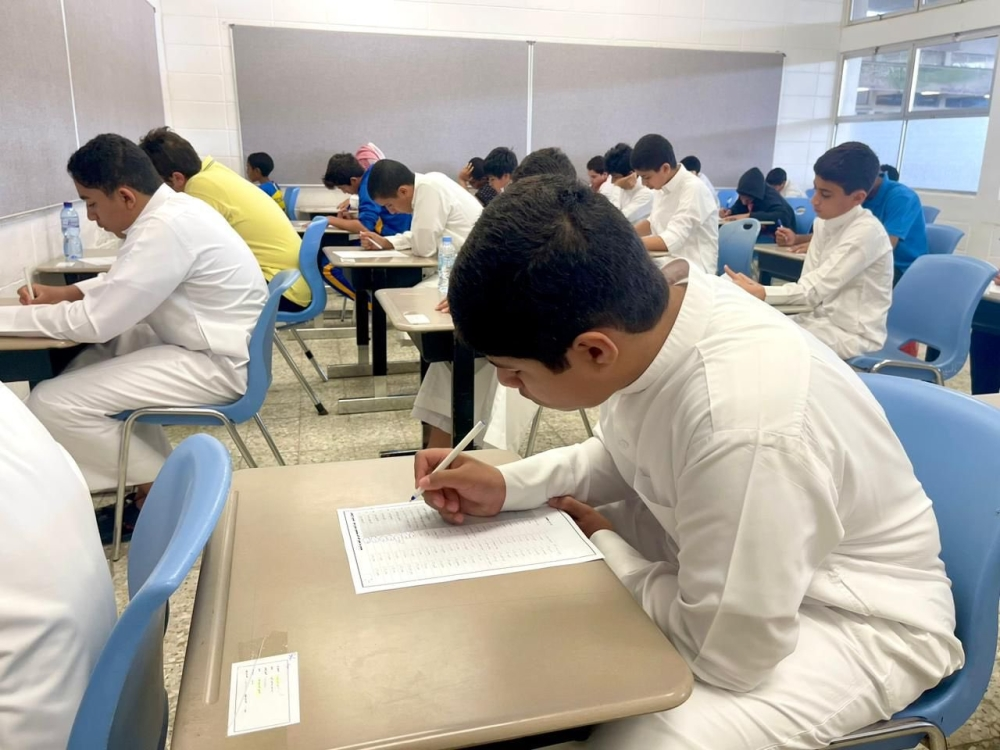
The Saudi Ministry of Education has revealed the detailed academic calendar for the second semester of the 1447 AH academic year, putting an end to speculation and presenting a precise structure spanning 19 weeks. This step comes as part of the Ministry's commitment to organizing the educational process in a way that considers social changes and the spiritual significance of the holy month of Ramadan, during which the number of school days has been significantly reduced to enable students and parents to balance academic achievement with religious observances.
According to the official announcement, the second semester will begin on Sunday, 29 Rajab 1447 AH, continuing until Thursday, 10 Muharram 1448 AH. The approved academic calendar indicates a total of 92 actual school days across the Kingdom, with limited exceptions for regions subject to specific geographical or climatic arrangements as outlined in the calendar.
Study mechanism during Ramadan 1447 AH
In a decision widely welcomed by educators and families, the Ministry of Education has approved a school week of only 11 days during the holy month of Ramadan. This step is a flexible response to the needs of the community, aiming to ease the burden on students during the month of fasting while ensuring that the academic plan is not disrupted. The Ministry explained that this precise time allocation aims to create an ideal balance between academic discipline and necessary rest periods, thus promoting the mental well-being of students and all members of the educational community.
Context of the transformation in Saudi education
The announcement of this year's academic calendar comes amidst fundamental transformations in the Saudi Arabian education sector, in line with the objectives of Vision 2030 and the Human Capital Development Program. Through these extended and carefully considered timelines, the Ministry aims to enhance the efficiency of the education system and increase the number of actual learning days compared to global averages, while maintaining the system's flexibility. Early planning for the academic year 1447 AH reflects the Ministry's strategy of promoting organizational stability and enabling schools and education departments to prepare optimally well in advance.
The social and economic impact of the new calendar
The impact of this announcement extends beyond the academic sphere, encompassing significant social and economic aspects. By confirming three distinct breaks totaling 28 days during the semester, the Ministry provides Saudi and resident families with the opportunity to plan their vacations and travel in advance, positively impacting domestic tourism and the service sector. Furthermore, clarity regarding Ramadan's working hours helps families organize their daily routines and social activities more efficiently and comfortably, reducing daily stress and enhancing their overall quality of life.
The ministry concluded its assurances by stating that this structure will ensure complete stability for study schedules and exams, stressing that reducing the number of study days in Ramadan came in accordance with arrangements that ensure the smooth flow of the curriculum and the achievement of the targeted learning outcomes without any educational loss, which contributes to providing a stimulating and stable educational environment for all.