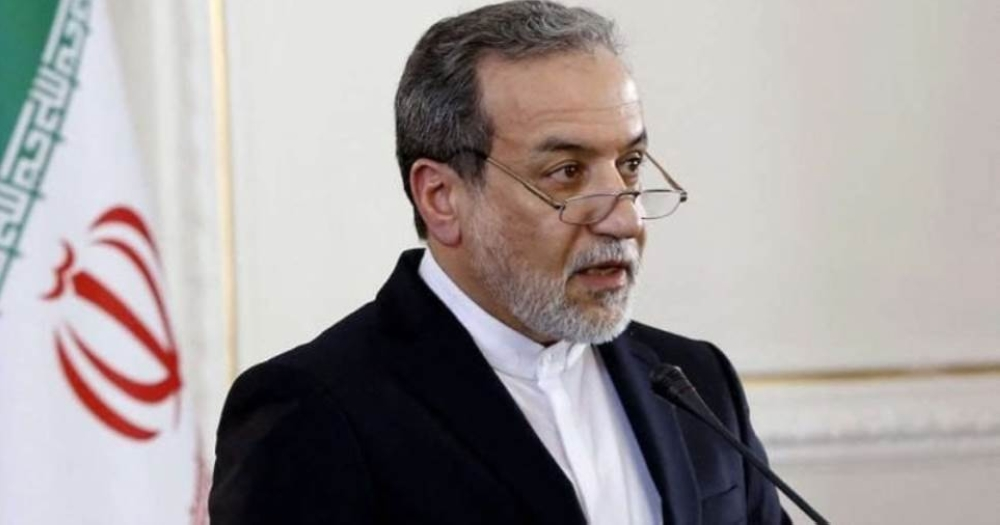
Iranian Foreign Minister Abbas Araqchi in a press statement that Saudi officials have given clear and direct assurances to Iran that they will not allow their territory or airspace to be used for any hostile military operations targeting the Islamic Republic. Araqchi explained that communication channels between Tehran and Riyadh remain open and ongoing, reflecting a significant improvement in security and political coordination between the two neighboring countries.
Post-Beijing diplomatic shifts
Abbas Araqchi's remarks come within the context of a new phase in diplomatic relations between the two countries, which was ushered in by the landmark agreement brokered by China in March 2023. This agreement not only ended years of diplomatic estrangement that began in 2016, but also laid the foundation for a new era of mutual trust and regional cooperation. Since then, relations have witnessed an exchange of high-level official visits, the reopening of embassies, and the reactivation of long-standing security and economic agreements, paving the way for such sensitive understandings concerning the national security of both countries.
Abbas Araqchi and the importance of regional neutrality
These assurances are of paramount importance given the escalating tensions in the Middle East, particularly the mutual threats exchanged between Israel and Iran. Analysts point out that the Saudi position reflects the Kingdom's long-standing strategy of distancing itself from direct military conflicts and focusing on domestic development within the framework of Vision 2030, which requires a stable and secure regional environment. Abbas Araqchi's on these guarantees sends a reassuring message to the Iranian public, while simultaneously highlighting Saudi Arabia's role as a stabilizing force that refuses to be drawn into proxy wars or allow the region to become an open battleground.
International repercussions and the unified Gulf position
Internationally, this stance is interpreted as part of a broader Gulf trend toward adopting a policy of positive neutrality in major conflicts. The Gulf Cooperation Council (GCC) states, particularly Saudi Arabia, recognize that any full-scale military escalation would harm global energy markets and international shipping lanes. Therefore, refusing to allow the use of their airspace for attacks is not merely a sovereign decision, but a strategic imperative to protect both global and domestic economic interests. These developments underscore the success of Abbas Araqchi's in keeping neighboring countries neutral in the ongoing conflict with Israel.