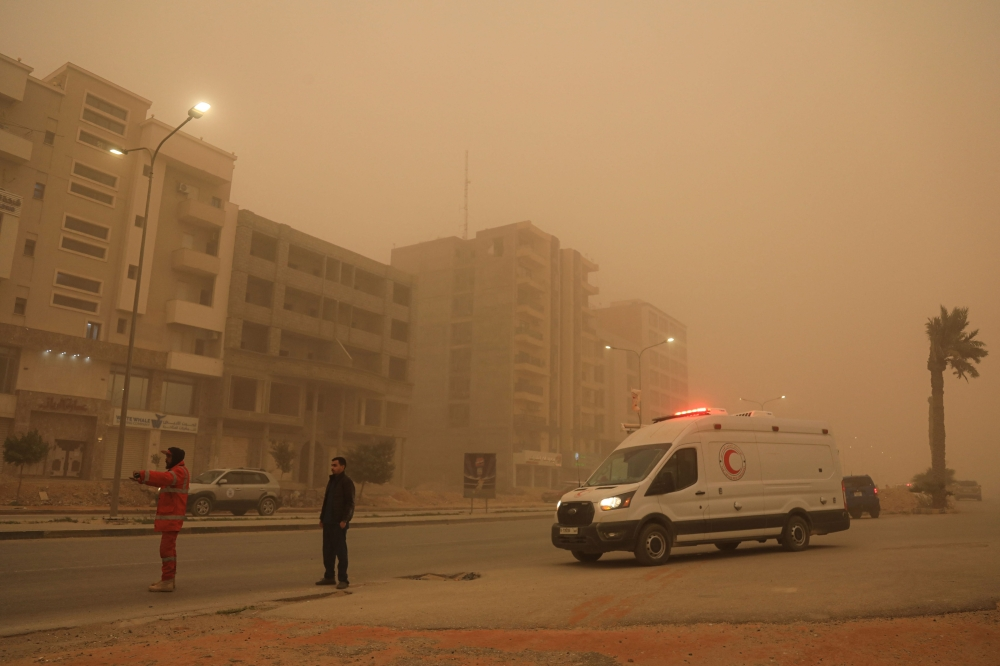
Eastern and southern Libya have been hit by a wave of severe weather and extreme atmospheric fluctuations, resulting in significant loss of life and property damage. The Libyan Red Crescent announced today that two people have died as a result of the powerful storm that swept across the country, causing near-zero visibility and widespread disruption to daily life.
Material losses and widespread fires
The damage was not limited to human casualties; it extended to infrastructure and public and private property. High wind speeds caused several fires in various areas, in addition to the uprooting of numerous trees, billboards, and light poles, leading to the closure of some main roads. Emergency teams also reported the collapse of walls in some old and dilapidated houses, further straining the resources of the Red Crescent and Civil Defense teams.
Paralysis in air traffic and oil ports
As a precautionary measure, the official Libyan news agency reported that authorities were forced to impose a complete curfew in the affected areas to protect citizens' lives. Several flights to and from airports in eastern Libya were also suspended due to reduced visibility and strong winds associated with the dust storm.
On the economic front, the storm cast a shadow over the vital oil sector, with field reports indicating that oil ports in the Oil Crescent region were affected, prompting the temporary closure of four major oil ports for three days to avert environmental and maritime disasters. In a separate incident related to the severe weather, an oil tanker sank in the port of Ras Lanuf, highlighting the perilous state of maritime navigation.
Geographic context and climate impact
This storm comes amidst a climate pattern that Libya is experiencing, where the eastern and southern regions are characterized by open desert terrain, making them prone to sandstorms and strong winds known locally as "Ghibli." These weather phenomena often lead to complete paralysis of traffic and navigation, and pose significant challenges to infrastructure that requires regular maintenance to withstand such extreme weather events.
Local authorities are urging all citizens to adhere to security instructions, stay at home and only go out when absolutely necessary, and secure loose objects on rooftops to ensure this wave passes with minimal damage.