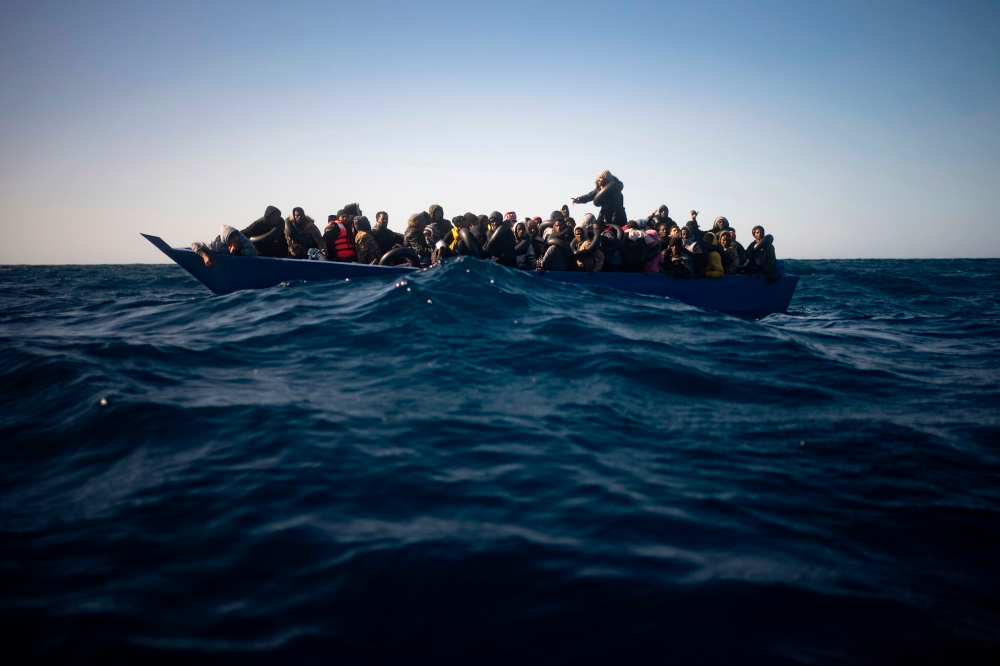
The Mediterranean Sea witnessed another chapter in the ongoing human tragedy, as Greek authorities announced on Saturday the deaths of at least 18 irregular migrants after their rubber boat sank during a perilous crossing attempt south of Crete. This incident once again highlights the grave dangers faced by those fleeing conflict and poverty in search of a better life in Europe.
Details of the incident and search operations
According to official data from the Greek Coast Guard, the disaster was discovered when a Turkish-flagged merchant ship spotted the stricken boat partially sinking in international waters south of Crete. The merchant ship's crew rescued two people struggling in the waves, while rescue teams recovered the bodies of the 18 victims. Search and rescue operations are continuing in the area surrounding the crash site, in case there are other missing persons, despite the challenges posed by the vastness of the search area in open waters.
The migration route across the Eastern Mediterranean: Growing risks
Greece, by virtue of its geographical location, is one of the main gateways to the European Union for migrants arriving from the Middle East, Asia, and Africa. While the central route through Italy sees massive influxes, the eastern route through the Greek islands and southern Crete remains active and dangerous. Smugglers often use flimsy, unseaworthy rubber dinghies, cramming far beyond their capacity, making even a slight change in weather or high waves a potential disaster.
International context and the refugee crisis
This incident comes at a time of escalating debate within the European Union regarding migration and asylum policies. Statistics from international organizations, such as the International Organization for Migration (IOM), indicate that the Mediterranean Sea remains the world's deadliest migration route, having claimed thousands of lives over the past decade. Frontline states like Greece and Italy face immense pressure to manage the influx of migrants, amidst persistent calls for greater European solidarity and the development of effective strategies to combat human trafficking networks that exploit migrants' desperation.
Humanitarian and political repercussions
Such incidents provoke widespread reactions on both human rights and political levels, with humanitarian organizations renewing their calls for safe passage for asylum seekers to avoid resorting to perilous sea crossings. The incident also highlights the importance of regional cooperation in search and rescue operations, as demonstrated by the role of the Turkish merchant vessel in this particular incident, underscoring that humanitarian responsibility in the Mediterranean transcends political boundaries.