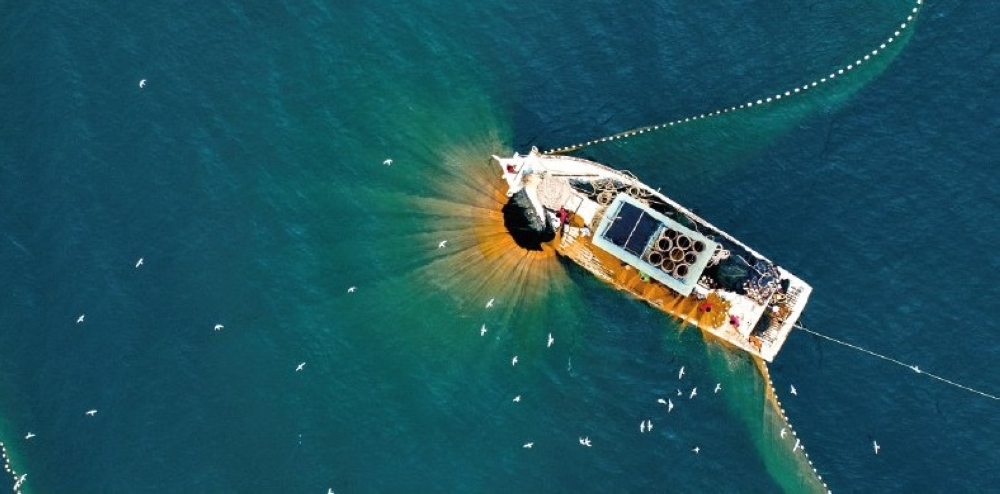
The project sets out clear mechanisms for controlling violations and imposing penalties, along with a detailed breakdown of the financial fines that may be imposed on violating individuals and establishments, which in some cases may reach tens of millions of riyals.
Mechanism for detecting violations and imposing penalties
The article explained that the fines stipulated in the violation schedules represent the maximum limits of financial penalties, while the competent authority determines the actual value of the fine according to the nature and severity of the violation and the aggravating or mitigating circumstances associated with it.
The draft law stipulates reducing the value of fines for non-serious violations committed by individuals to the equivalent of 25% of the value of fines specified in the schedule of violations, while specific percentages are applied to commercial establishments according to the classification of the size of the establishment, where the fine is 25% for micro establishments, 50% for small establishments, and 75% for medium establishments, while large establishments bear the full value of the fine.
Regarding serious violations, the project indicated that the assessment of the fine depends on several criteria, most notably the degree of environmental damage, the environmental importance of the affected site, the area of the affected region, in addition to the economic and social effects resulting from the violation.
In cases of minor offenses, the size of the activity, its economic classification, and the nature of the surrounding area are taken into consideration when assessing the penalty.
The regulation obliges the violator to correct the violation and repair the resulting environmental damage, in addition to paying the resulting compensations. It also allows the competent authority to grant the violator a grace period to correct the violation before applying the penalty if he voluntarily discloses it.
The competent center has the right to issue a time-limited warning before imposing fines, while the penalty is doubled if the same violation is repeated within one year from the date of the final decision on the previous penalty.
Fishing violations and attacks on marine life
Serious violations include collecting or extracting endangered marine organisms or harming them, as well as collecting their products or derivatives, where fines in these cases may reach 500,000 riyals, in addition to imposing additional fines for each unit of measurement that is extracted.
The regulations also impose fines for fishing for marine organisms without a license, with penalties ranging from 1,000 riyals to 100,000 riyals. Collecting or extracting marine organisms without a license is also punishable by the same fines.
Other violations include failing to return endangered marine creatures to the sea if they are caught bycatch, where the fine may reach 10,000 riyals per creature and a maximum of 100,000 riyals.
The regulations impose fines for releasing marine organisms into the marine environment without obtaining a license, with penalties ranging from 2,000 riyals to 20,000 riyals per organism, up to a maximum of 100,000 riyals.
Violations of interaction with marine organisms and natural habitats
The regulations impose strict fines for damaging or harming coral reefs or sponges, with fines starting from five thousand riyals and reaching the value specified for the organism in the fines schedule.
Removing or damaging marine habitats or collecting their eggs is a serious violation that may result in a fine of up to 500,000 riyals, in addition to obligating the violator to repair the damages and pay compensation.
The regulations impose hefty fines for releasing invasive organisms or animals into the marine environment, with penalties reaching up to 50,000 riyals per organism and a maximum of one million riyals.
Maritime navigation violations and pollution
Failure to comply with the ship's ballast water management plan is punishable by fines of up to one million riyals, while penalties reach two million riyals in the event of failure to comply with the necessary testing procedures before discharging ballast water for ships suspected of violating environmental requirements.
The regulations impose strict fines for failure to report oil spills or leaks of harmful materials, with fines reaching up to one million riyals, and up to five million riyals if the necessary measures are not taken to contain the spills.
Discharging untreated wastewater or disposing of waste in the marine environment is punishable by fines of up to 500,000 riyals, while penalties can reach 20 million riyals in the case of disposing of hazardous waste in the marine or coastal environment.
Violations of maritime activities and licenses
Failure to comply with environmental licensing and permit regulations is punishable by fines of up to 200,000 riyals, in addition to penalties for preventing competent authorities from carrying out their supervisory duties, which may reach 20,000 riyals.
Violations also include non-compliance with decisions to suspend or temporarily restrict activities issued to protect wildlife, where the fine may reach 500,000 riyals.
Huge fines for fishing for rare marine creatures
The fine for hunting dugongs or whale sharks is one million riyals per animal, while fines for hunting different types of dolphins reach 150,000 riyals.
As for sharks, the regulations set fines ranging between 40,000 and 100,000 riyals depending on the species, while the fine for catching a Napoleon wrasse is 25,000 riyals.
The regulations impose fines for hunting sea turtles ranging between 50,000 and 300,000 riyals per creature, depending on its size and type.
The fines include invertebrates such as sea cucumbers and pearl oysters, with penalties ranging from 1,000 to 3,000 riyals for some species, and up to 50,000 riyals for other species such as the sea oyster.